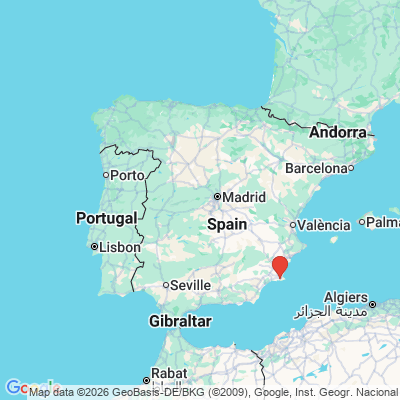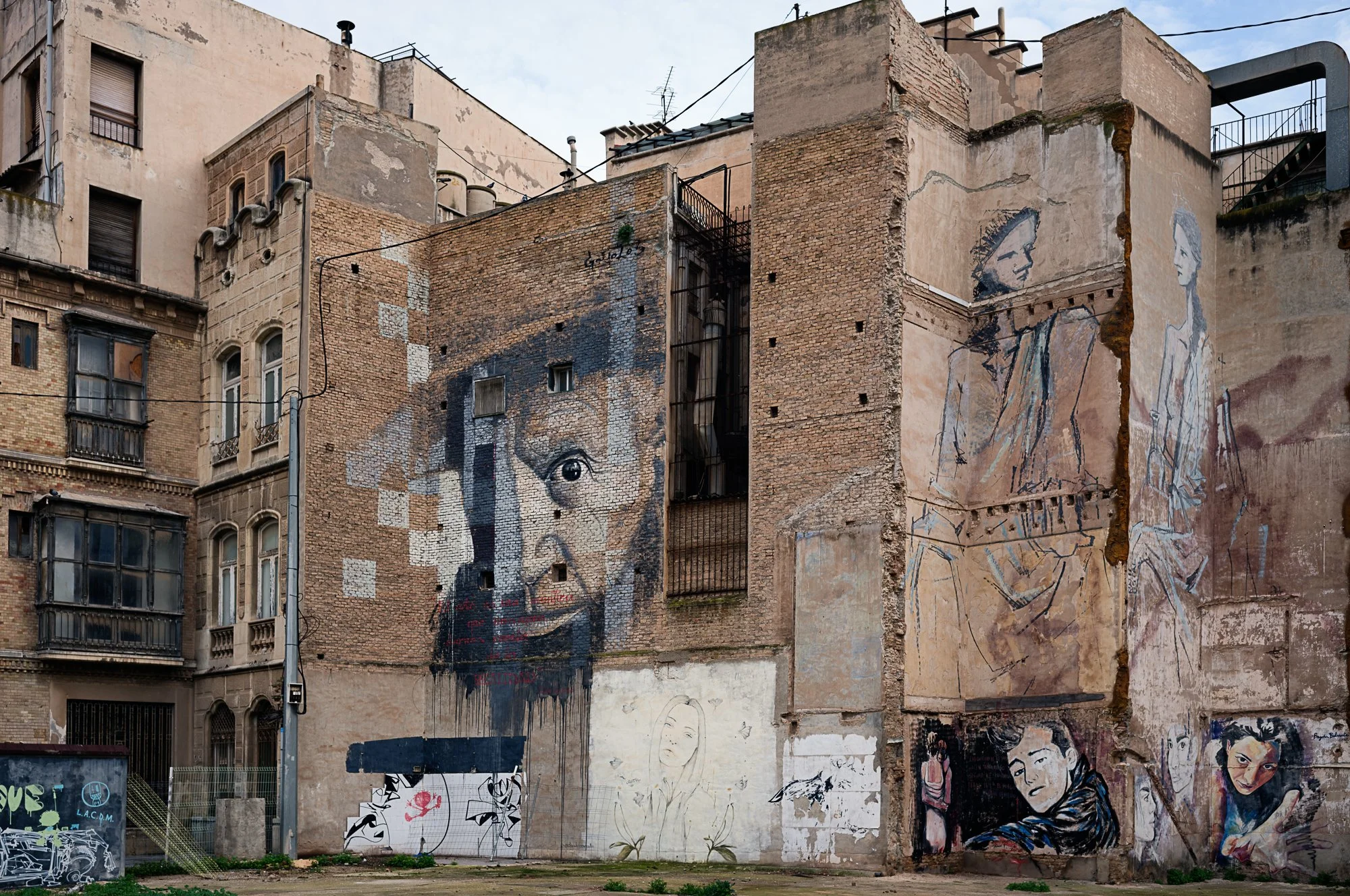
Street art in Cartagena.
At first glance this corner of Cartagena looks like a forgotten place: crumbling brick walls, fragments of demolished houses, and empty urban space. But look again and the wall begins to speak.
Across the surface runs a collage of murals. A large, fragmented face dominates the centre, emerging from the brickwork as if the building itself were revealing a memory. Around it appear sketch-like figures and smaller portraits, some bold and recent, others faded and partially erased.
Cartagena is a city built on layers of history. Founded by the Carthaginians as Qart Hadasht, it later became the Roman port of Carthago Nova. Yet the wall in this photograph tells a much more recent story.
During the late twentieth century parts of the historic centre declined, leaving empty plots and exposed walls. These surfaces gradually became canvases for urban artists. Festivals such as Mucho Más Mayo helped encourage this transformation, turning neglected corners into open-air galleries.
What makes scenes like this fascinating is their unfinished quality. The murals interact with cracks, repairs and old brickwork. Art and architecture blend together, creating a living canvas that changes over time.
In Cartagena, even a broken wall can become part of the city’s cultural landscape.