Art

Mona Mania— Why the World Never Stops Lining Up for Her Smile

No comment.

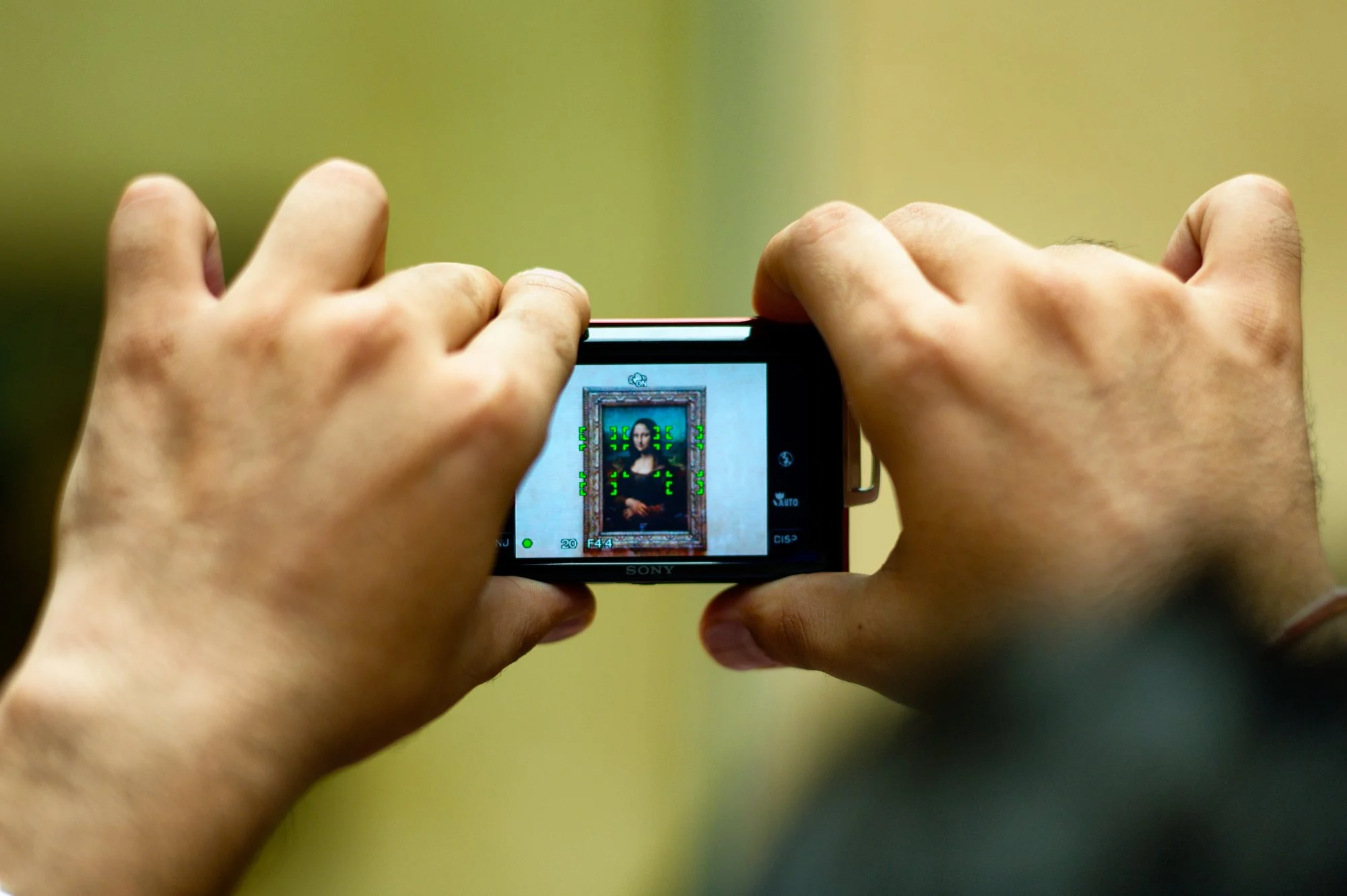
There she sits — small, dark, behind bulletproof glass — and yet the crowd in the Louvre moves as if drawn by gravity itself. Cameras rise like a forest of hands. Whispers turn to gasps. For a few seconds, each visitor faces her — La Joconde, Leonardo’s Mona Lisa — and the miracle happens: proof. “I’ve seen it.”

But why this painting? Why not the radiant Venus de Milo just down the hall, or Delacroix’s Liberty Leading the People, blazing with drama and revolution? The Mona Lisa is quiet, almost modest — a woman sitting in stillness. Her mystery is not what she shows, but what she withholds. The half-smile that seems to change as you move. The eyes that appear to follow. Leonardo layered glazes of paint so thin they act like human skin; light breathes through her face, giving her an uncanny presence.

Her fame, however, was not born in the studio — it exploded in 1911, when she was stolen from the Louvre. For two years, she was the missing woman of Europe: her empty wall a national wound. When she returned, the world had made her a celebrity. From then on, her fame fed itself — through postcards, posters, parodies, and selfies.

Today, the Mona Lisa’s value isn’t just artistic; it’s symbolic. She is the universal passport to the art world — the one image everyone recognizes. Seeing her in person is like standing next to history itself, the moment when genius, myth, and human curiosity all meet in silence.

People crowd her room not just to look, but to witness. To say, I was there, she is real, and so am I.

Picasso Arrives in Paris

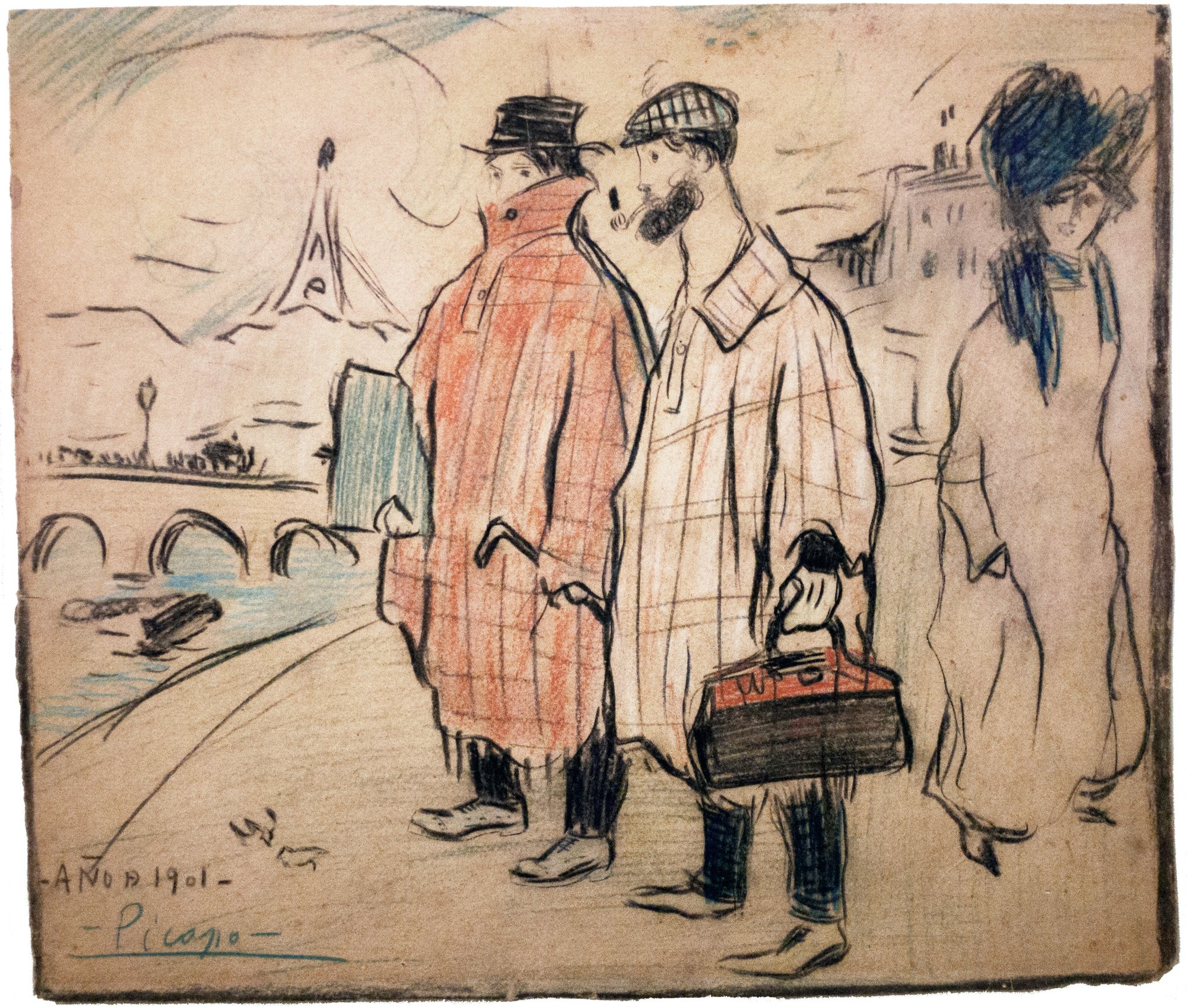
“Picasso llegando a París con Jaume Andreu Bonsons” (Paris, May 1901) - seen in Berlin.

In May 1901, a 19-year-old Pablo Picasso arrived for the second time in Paris — no longer the carefree prodigy who had first come the year before, but a young man changed by grief. Just months earlier, his close friend Carles Casagemas had taken his own life, an event that would haunt Picasso for years and give birth to his Blue Period.

This moment of return is captured in his drawing “Picasso llegando a París con Jaume Andreu Bonsons”, executed in colored wax crayons on card. The work shows Picasso beside his friend Jaume Andreu Bonsons, another Catalan painter, as they enter the city that would shape modern art. Their faces carry both determination and fatigue — the look of two young men stepping into a new chapter, carrying memory as baggage.

Only weeks after this arrival, Picasso held his first major exhibition at Ambroise Vollard’s gallery, marking the start of his Paris years and his rapid transformation from promise to legend.

Seen today, “Picasso llegando a París” feels like a hinge between innocence and maturity — a fragile record of friendship, resilience, and the moment when the artist’s personal sorrow began to turn into art.