
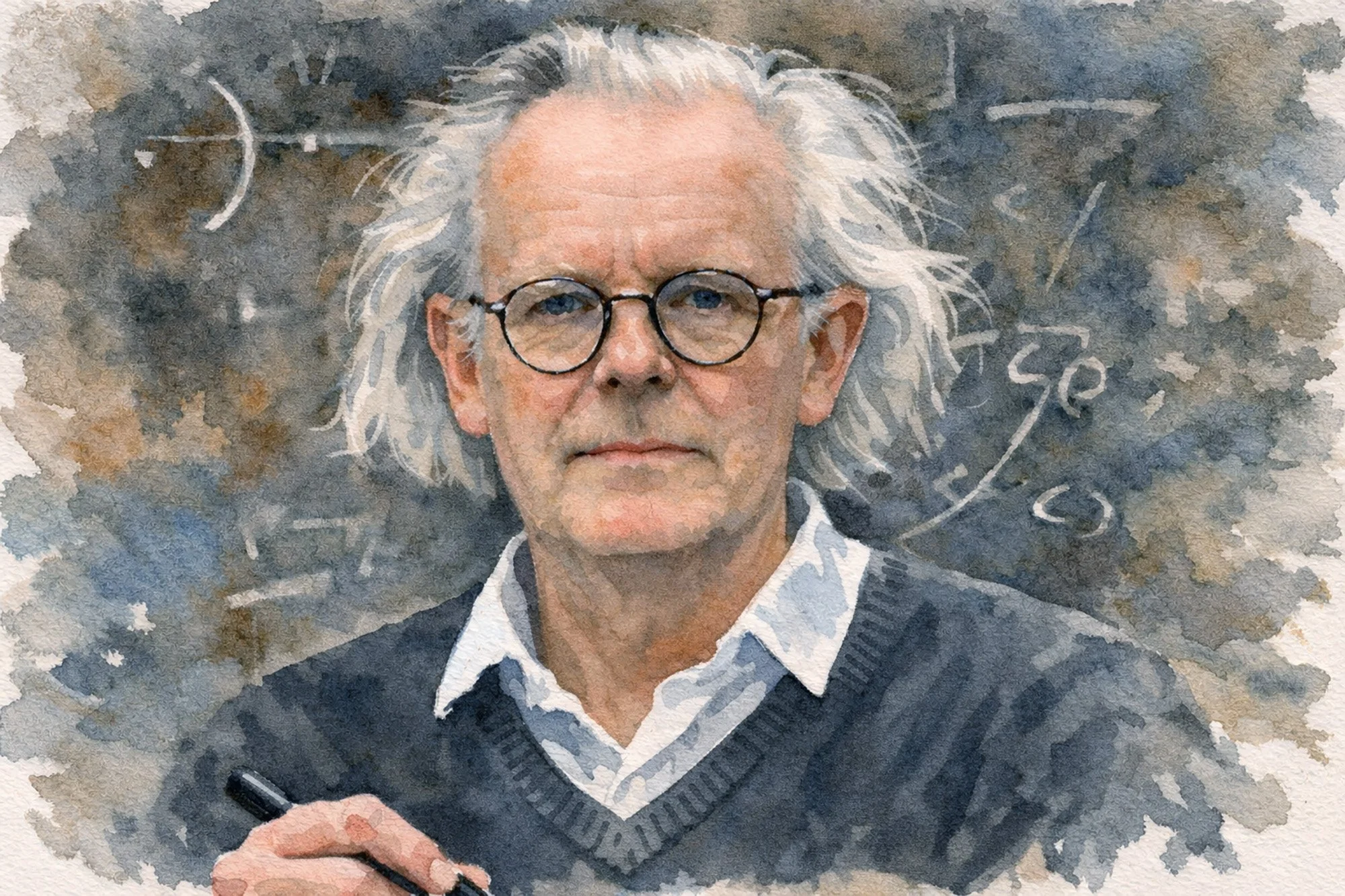
John Maynard Smith
In 1973, the British evolutionary biologist John Maynard Smith published a book that would quietly reshape how scientists think about conflict: Evolution and the Theory of Games.
Maynard Smith, who spent much of his career at University of Oxford, was not writing about politics or diplomacy. He was studying animals. Yet his ideas may help explain a surprising amount about the modern geopolitical world.
Hawks and Doves
Maynard Smith introduced a simple model to understand conflict in nature. Imagine two types of behavior:
Hawks escalate immediately. They fight aggressively for territory, food, or status.
Doves avoid real fighting. They threaten a little, display strength, but retreat before serious damage occurs.
When two hawks meet, the result can be destructive: both risk injury.
When a hawk meets a dove, the hawk wins easily.
When two doves meet, they avoid costly violence and usually share or withdraw.
The key insight was striking: if the cost of fighting is high enough, a population made entirely of hawks is unstable. Pure aggression destroys itself. Nature therefore tends to produce a balance of strategies — what Maynard Smith called an evolutionarily stable strategy. Conflict exists. But it is limited.
Why Threats Often Replace War
Across the animal world, species rarely fight to the death. Instead, they rely on ritualized displays: antlers clashing, birds spreading wings, animals roaring or circling. These displays are not pointless theatre. They are a way to signal strength while avoiding catastrophic costs. In other words, nature evolved something that looks suspiciously like deterrence.
The Geopolitical Parallel
Look at today’s world and the pattern becomes recognizable.
Great powers threaten. They posture. They test each other’s resolve.
Military exercises replace battles. Sanctions replace invasions.
Rhetoric escalates while leaders quietly try to avoid direct collision.
From the perspective of Maynard Smith’s model, this is not surprising. When the cost of war becomes extreme — especially in a nuclear age — a world of constant hawks becomes dangerously unstable. If every actor behaves like a hawk, sooner or later two hawks collide. And in modern geopolitics, the injuries would be catastrophic.
The Dangerous Moment
But Maynard Smith’s work also highlights something unsettling.
Stable systems depend on a recognition of costs.
If leaders begin to believe that conflict will be cheap — or that opponents will always retreat — hawkish strategies suddenly become attractive. Escalation becomes rational again. History shows that many wars begin precisely when actors misjudge those costs. In evolutionary terms, the system briefly forgets the price of being a hawk.
A Lesson from Evolution
Maynard Smith never intended his work as political theory. Yet it offers a useful lens for understanding power and conflict. Peace is rarely the result of goodwill alone. More often, it emerges from a shared understanding that some fights are simply too expensive to win. Nature discovered this long before humans invented diplomacy. The real question for our time is whether political leaders still remember the same lesson.
Further Reading
John Maynard Smith - Evolution and the Theory of Games
John Maynard Smith & George.R. Price - The Logic of Animal Conflict
Richard Dawkins – The Selfish Gene