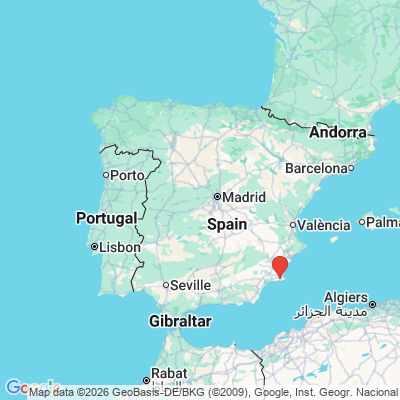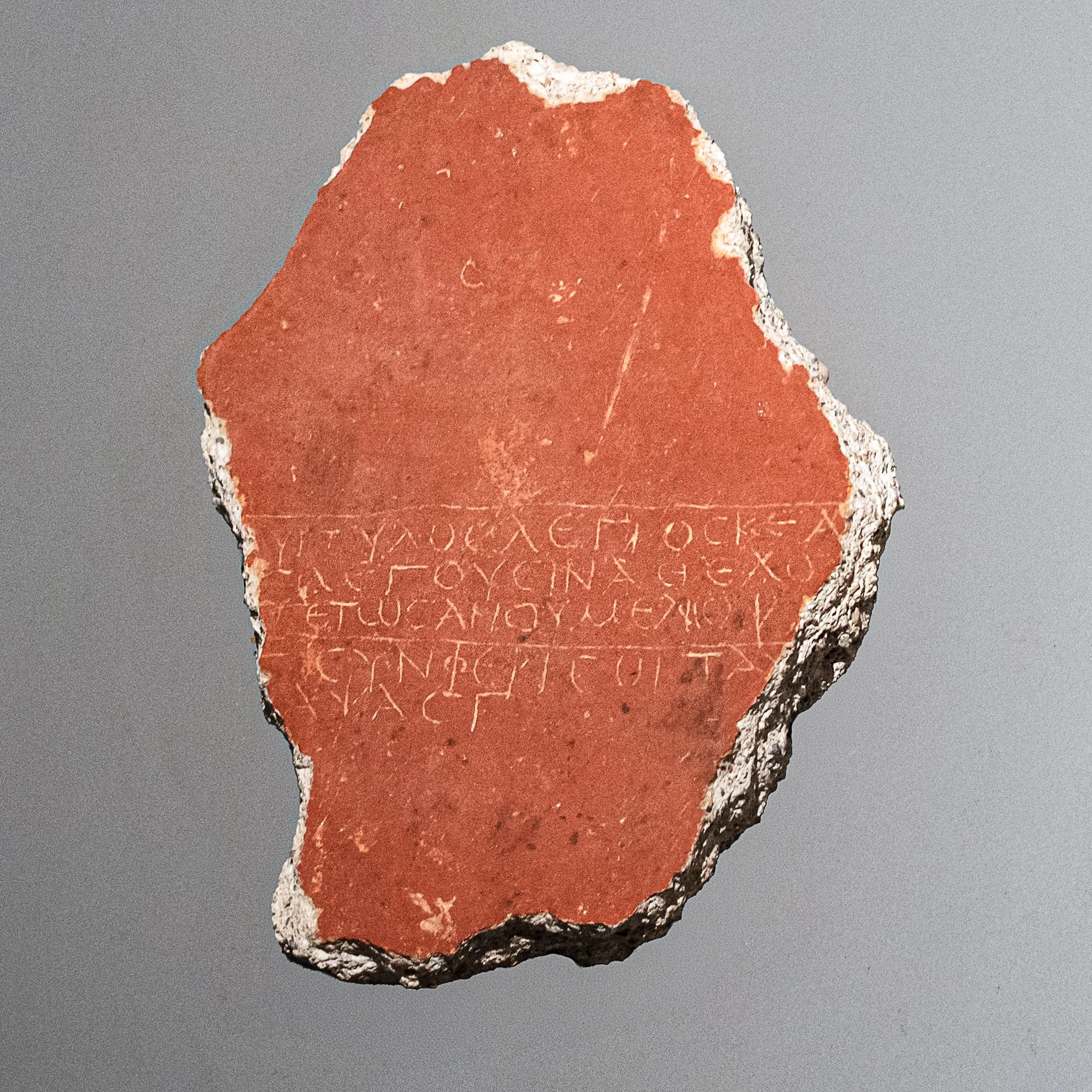
Greek graffiti scratched into painted plaster in Roman Cartagena. The inscription reads: “λέγουσιν ἃ θέλουσιν· λεγέτωσαν· οὐ μέλι μοι· σὺ φίλι με, συνφέρει σοι” — “They say what they want; let them say it; I don’t care; love me instead.” Versions of this catchy little poem have been found across the Roman world, from Spain to Iraq.
Long before social media, the Roman Empire may already have had its own viral memes and pop-song lyrics.
One remarkable example survives as graffiti scratched into a painted wall in Cartagena, the Roman city of Carthago Nova. Written in Greek, the short poem says:
“They say what they want.
Let them say it.
I don’t care.
Love me instead.”
The lines sound surprisingly modern — playful, rebellious, and easy to remember.
What makes the story extraordinary is that versions of the same little poem have been found across the Roman world: in Spain, Egypt, modern Hungary, Syria, and Iraq.
Usually the text appeared engraved on cheap gemstones or amulets carried by ordinary people. But in Cartagena someone simply scratched it onto a wall — proof that this was not elite literature, but part of everyday popular culture.
Classicist Tim Whitmarsh believes the poem may even preserve the sound of ordinary speech in the Roman Empire. Its rhythm works less like formal classical poetry and more like modern song lyrics or chants.
In other words: nearly 2,000 years ago, people across the Roman Empire may already have been sharing the ancient equivalent of memes, catchphrases, and pop songs.