
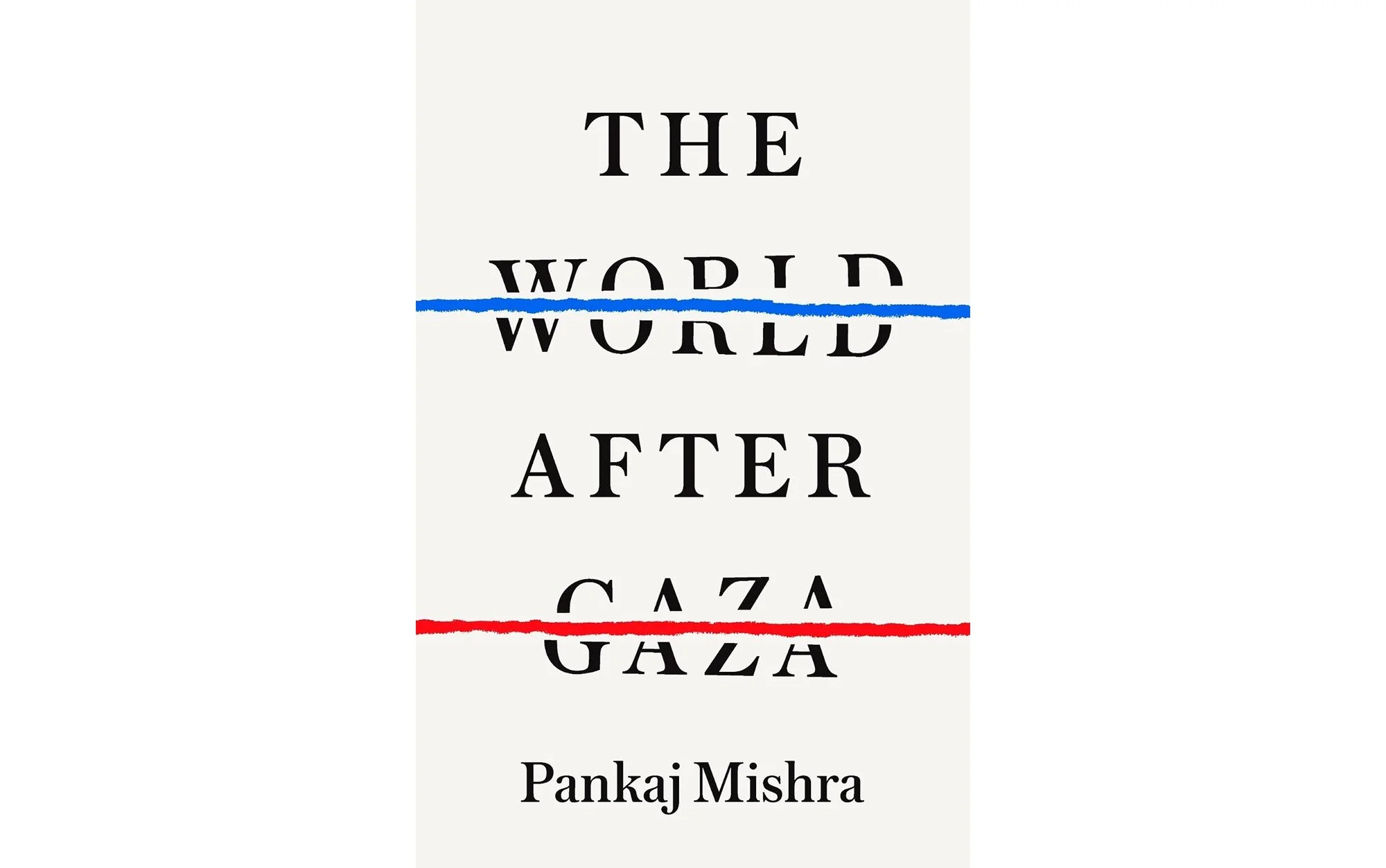
Pankaj Mishra’s The World After Gaza is not simply a book about the war in Gaza. Nor is it a traditional political history of Israel and Palestine. It is a broader reflection on violence, memory, colonialism, and the moral authority of the modern West.
What makes the book unusual is its point of view. Pankaj Mishra writes not as a European or an American, but as an Indian intellectual shaped by the history of colonialism and by the experience of living outside the Western world. That perspective matters. The book is, in many ways, an attempt to describe how the events in Gaza are seen across large parts of Asia, Africa and the Middle East — regions where European history is remembered not only through the Holocaust and democracy, but also through empire, racial hierarchy and colonial violence.
For Mishra, Gaza has become a moment in which these different historical memories collide.
In Europe, the Holocaust remains the central moral reference point of modern history. The promise of “never again” shaped Europe’s postwar identity and strongly influenced its relationship with Israel. But Mishra argues that many people outside the West increasingly see a contradiction between Europe’s universal language of human rights and its reactions to Palestinian suffering.
Whether one agrees with him or not, this is the uncomfortable core of the book.
Mishra moves through a wide landscape of ideas and history: anti-Semitism, Zionism, European imperialism, postcolonial thought, nationalism, and the long shadow of twentieth-century violence. He does not deny Jewish suffering or the horrors of the Holocaust. But he questions whether Europe’s historical guilt has, at times, made open discussion about Israel and Palestine more difficult.
That argument places European readers in a difficult position.
Can Europeans defend both Israel’s security and universal human rights without appearing selective? Can criticism of Israeli policy remain separate from anti-Semitism? And how should Europe respond when much of the non-Western world increasingly interprets Gaza through the language of colonialism and inequality rather than through Europe’s postwar moral framework?
The book does not offer easy answers. In fact, part of its power lies in its refusal to comfort the reader. Mishra deliberately challenges assumptions that many Europeans have long taken for granted about morality, historical responsibility and the role of the West in the world.
Critics of the book argue that Mishra oversimplifies Israeli fears and reduces a highly complex conflict to a colonial narrative. Admirers see the book as an important attempt to explain why Western reactions to Gaza have damaged the credibility of Europe and the United States in many parts of the world.
Both reactions reveal something important: The World After Gaza is not mainly a book about diplomacy or military strategy. It is a book about legitimacy — about who has the moral authority to speak in the name of humanity, justice and universal values.
For European readers, that may be the most unsettling aspect of all.
The book quietly raises a larger question: what happens if the rest of the world no longer sees Europe as the moral centre of global politics, but as one historical power among many — carrying both the achievements and the burdens of its past?
Mishra does not celebrate that shift, nor does he fully explain where it may lead. But he argues that Gaza has accelerated it.
That makes The World After Gaza an uncomfortable but important book: not because it tells Europeans what to think, but because it forces them to see themselves through the eyes of others.
Further reading
The Age of Anger — Pankaj Mishra
From the Ruins of Empire — Pankaj Mishra
Orientalism — Edward Said
Enemies and Neighbours — Ian Black