book

Surviving Deception: The Picaresque World of Lazarillo de Tormes

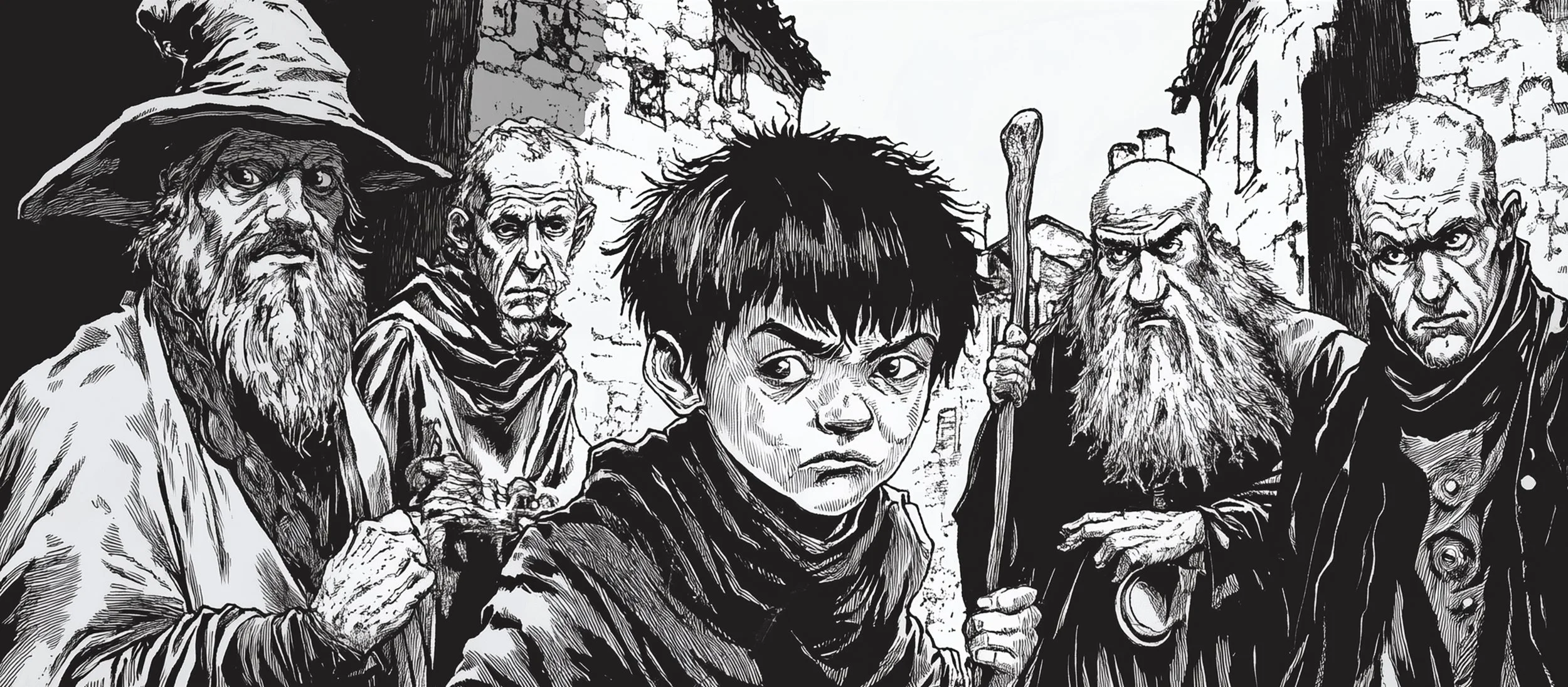
Lazarillo de Tormes is a Spanish novel, published anonymously in 1554, that exemplifies the picaresque genre—a style of storytelling that follows the adventures of a roguish yet resourceful protagonist, often of low social standing, who must rely on wit and cunning to survive in a corrupt and unjust society. The story revolves around Lázaro, a poor boy born near the river Tormes, who, after losing his father at a young age, is sent by his mother to serve as an apprentice to a blind beggar. This cruel master forces him to endure hardship, but in doing so, also teaches Lázaro the harsh realities of life. Quickly, the boy learns that deception and trickery are sometimes his only means of survival.

Like many picaresque protagonists, Lázaro moves from one master to another, each encounter offering a glimpse into the different layers of Spanish society. He serves a miserly priest who hoards food while his servant starves, compelling Lázaro to develop clever ways to steal. Later, he becomes the attendant of a proud yet destitute nobleman who values his dignity above basic survival, leaving Lázaro to beg on his behalf. He also crosses paths with a corrupt seller of indulgences, whose manipulative schemes reveal the deep-seated hypocrisy within religious institutions.

Throughout his journey, Lázaro adapts, using whatever means necessary to improve his circumstances—whether through deception, strategic flattery, or sheer resilience. Eventually, he secures a stable position as a town crier and marries a woman with ties to a local priest, seemingly achieving some level of social respectability. However, true to the picaresque tradition, his success is tinged with irony, as it comes at the cost of his moral integrity and forces him to accept the very corruption he once struggled against.

With its sharp satire and unfiltered realism, Lazarillo de Tormes exposes the hypocrisy of the church, the rigid class divisions, and the daily struggles of the lower classes in 16th-century Spain. As one of the earliest and most influential picaresque novels, it presents a world where survival depends not on noble ideals, but on the ability to navigate a society built on illusion and deception.

Egeria of Hispania: Travels of a Woman in the Late Roman Empire

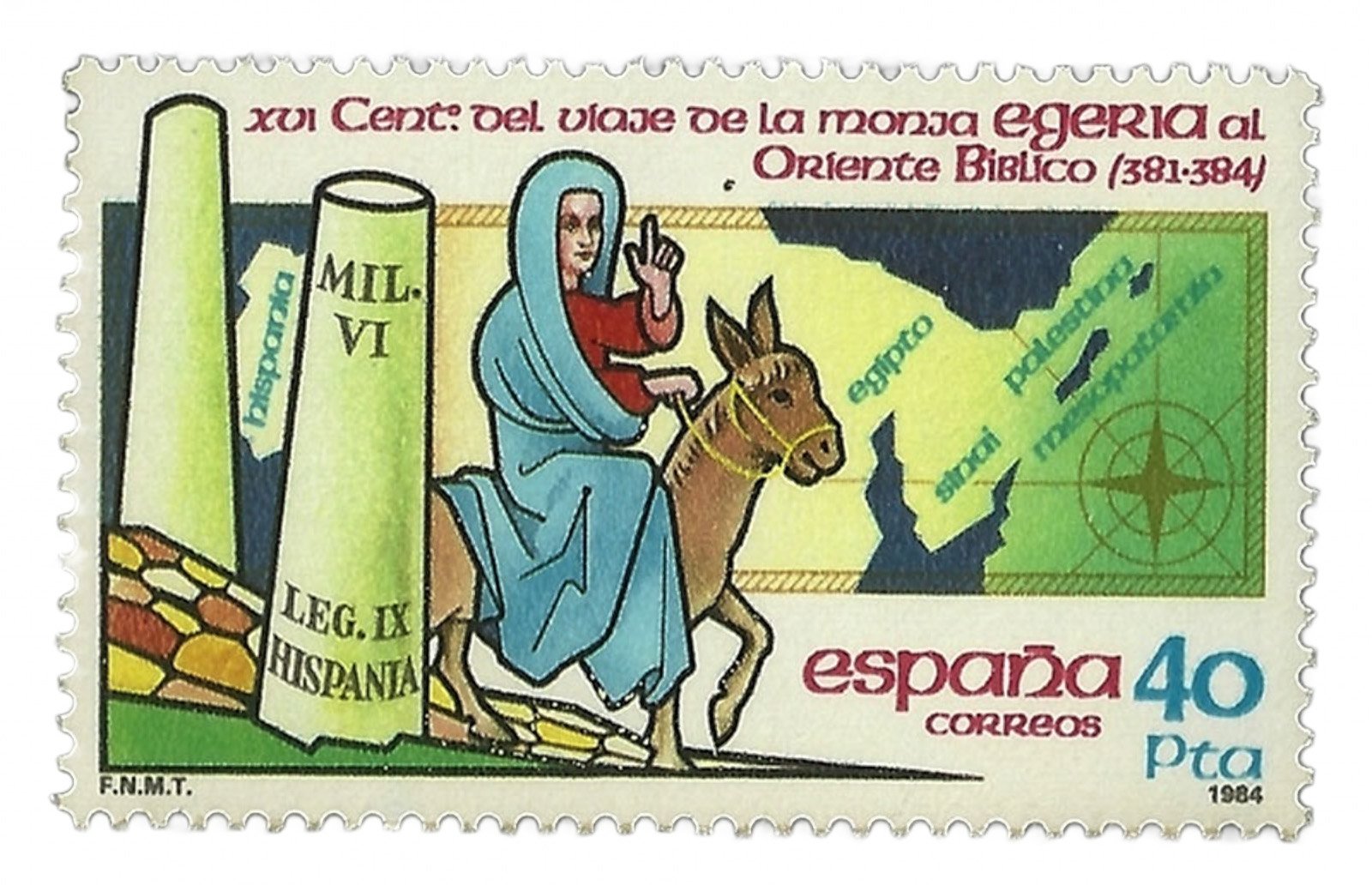
Egeria on the road — a Spanish stamp from 1984 commemorating the 4th-century pilgrim from Roman Hispania, whose letters describe her long journey (381–384) through the eastern Mediterranean in search of biblical places and lived faith.

In the late fourth century, when the Roman Empire was changing shape and Christianity was becoming its spiritual backbone, a woman from the far western edge of the known world set out on an extraordinary journey. Her name was Egeria. She came from Roman Spain—probably from Gallaecia (Galicia)—and she left behind something rare and precious: a first-hand account of her travels across the eastern Mediterranean and the Holy Land, written in her own voice.

Egeria did not travel as a princess, nor as a pilgrim escorted by armies. She travelled as an educated, determined Christian woman, curious about places, rituals, and people—and confident that she had every right to be on the road.

A Woman Who Could Travel

Egeria’s letters, often called her Itinerarium or travel diary, show that travel in Late Roman Spain was not reserved for men alone. Roads were maintained, hostels existed, and letters of recommendation opened doors. Egeria moves with surprising ease through a vast territory: from Constantinople to Jerusalem, from Mount Sinai to Mesopotamia, from Egypt to Asia Minor.

She travels slowly and attentively. She asks questions, listens to local guides, and records what she sees. Her tone is calm and practical. There is no sense that she feels she is doing something improper or dangerous simply because she is a woman. On the contrary, she writes as someone fully entitled to be where she is.

This alone makes her text remarkable.

Travel with Purpose, Not Escape

Egeria is often called a pilgrim, but her journey is more than a religious checklist. She does not rush from shrine to shrine. She wants to understand how places connect to Scripture, how local Christians celebrate feasts, how liturgy differs from one city to another.

When she reaches Jerusalem, she stays for a long time—not days, but years. She carefully describes Holy Week, Easter, and daily worship. Her interest is almost anthropological. She observes how religion is lived, not just where it is anchored.

This kind of travel requires time, resources, and social support. Egeria never explains exactly who she is, but it is clear that she belongs to an educated Christian elite—possibly a woman in a religious community, possibly of noble background. What matters is that her society allowed her enough freedom to travel, write, and be taken seriously.

Spain at the Edge, Not the Margin

Although Egeria writes mostly about the eastern Mediterranean, her Spanish origin matters. She refers to her homeland as distant but fully part of the Roman-Christian world. Spain is not a backwater in her eyes; it is simply far away.

Her letters were meant to be read back home, by a group of women she addresses as dominae sorores—“lady sisters.” This suggests a network of educated women in Roman Spain who were eager to learn, read, and imagine the wider world through her words.

Egeria is not writing for male authorities. She is writing to women like herself.

Practical, Curious, and Unafraid

What makes Egeria so modern is her voice. She writes in simple, clear Latin, closer to spoken language than to classical literature. She explains things patiently. She admits when she is tired. She notes when roads are difficult, when guides are helpful, when places are disappointing.

She climbs mountains because she wants to see where Moses stood. She visits remote monasteries because she is curious about how people live there. She asks bishops to explain things to her—and expects answers.

This is not passive devotion. It is active engagement with the world.

Freedom Within Limits

Of course, Egeria’s freedom was not universal. She could travel because she belonged to a specific social, religious, and economic class. Enslaved women, poor women, or women outside Christian networks did not enjoy the same mobility.

But within those limits, her journey shows what was possible. Late Roman Spain was part of an empire where women could own property, move independently, correspond across long distances, and participate intellectually in religious life.

Egeria’s letters quietly challenge the idea that ancient women were always confined, silent, or invisible.

Further Reading

  • Egeria. The Pilgrimage of Egeria: (A New Translation of the Itinerarium Egeriae.) Translated with introduction and notes by Anne McGowan and Paul F. Bradshaw. Collegeville, MN: Liturgical Press, 2018.

The Segunda Biblia de Pamplona. A Medieval Treasure

An illustration from the Segunda Biblia de Pamplona (12th century) depicting:

Joshua 10, 12-13: On the day the Lord gave the Amorites over to Israel, Joshua said to the Lord in the presence of Israel: “Sun, stand still over Gibeon, and you, moon, over the Valley of Aijalon.” So the sun stood still, and the moon stopped, till the nation avenged itself on its enemies.

Joshua 10, 26:  Then Joshua put the kings to death and exposed their bodies on five poles, and they were left hanging on the poles until evening.

In the heart of medieval Spain, in the kingdom of Navarre, a masterpiece of unparalleled beauty was created: the Segunda Biblia de Pamplona. More than just a religious text, this illuminated manuscript is a time capsule that transports us to a world of faith, art, and royal grandeur.

Commissioned by a member of the Navarrese royal family, this Bible is a testament to the patronage of the arts during the Middle Ages. The manuscript's intricate details and high quality reflect the skills of the artisans who created it.

The most striking feature of the Segunda Biblia de Pamplona is its collection of beautifully painted miniatures depicting biblical scenes. These illustrations are not only visually stunning but also provide valuable insights into the religious beliefs and artistic techniques of the time.

Created in the 12th century, this manuscript is a prime example of Romanesque art. Today, it resides in a private collection and is considered one of the most significant illuminated Bibles in existence.

One of the biblical stories depicted in the Segunda Biblia de Pamplona is the tale of Joshua and the conquest of Canaan. This dramatic narrative, where Joshua calls upon God to make the sun and moon stand still, is a testament to the power of faith and the divine intervention in human affairs.

The Sun Also Rises, Burguete (Spain)

Burguete, Navarre (Spain).

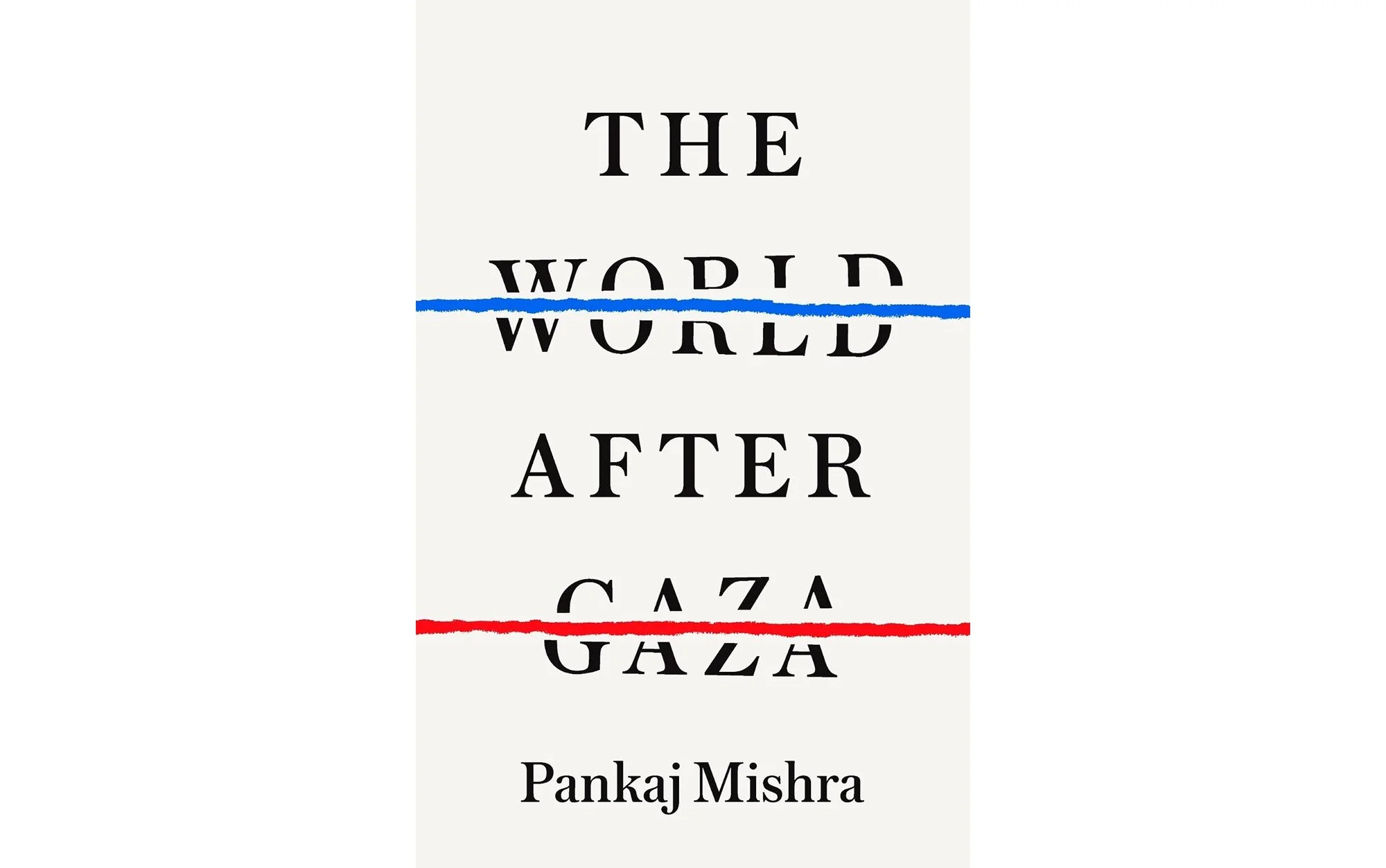
Ernest Hemingway's "The Sun Also Rises" (1926) is highly relevant today amidst the conflicts in Gaza, Lebanon and Ukraine. This is due to its exploration of themes like disillusionment, trauma, and the search for meaning in (the aftermath of) war. The novel's portrayal of characters grappling with the psychological scars of World War I resonates with the experiences of individuals affected by modern conflicts, who face similar struggles with loss, mental health, and existential uncertainty.

In the story, the village of Burguete serves as a serene retreat for the main character, Jake Barnes, and his friend Bill Gorton. Their time in Burguete, characterized by peaceful fishing trips and reflective conversations, provides a temporary escape from the chaos and emotional turmoil of their lives. This interlude highlights the human need for moments of respite and healing, even amidst the ongoing struggles and complexities brought about by war.