gaza

After Gaza: Europe’s Uncomfortable Moral Dilemma

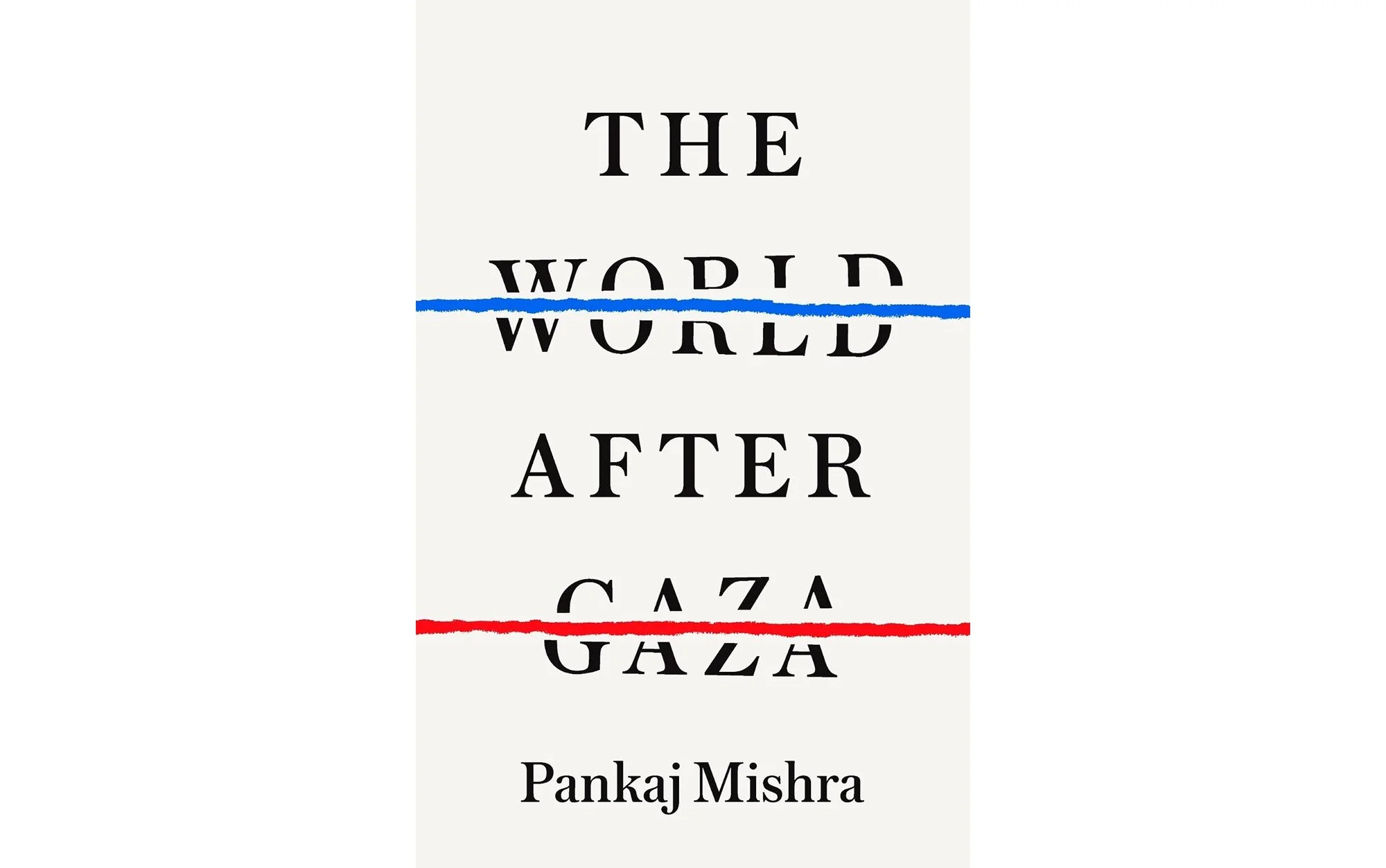
Pankaj Mishra’s The World After Gaza is not simply a book about the war in Gaza. Nor is it a traditional political history of Israel and Palestine. It is a broader reflection on violence, memory, colonialism, and the moral authority of the modern West.

What makes the book unusual is its point of view. Pankaj Mishra writes not as a European or an American, but as an Indian intellectual shaped by the history of colonialism and by the experience of living outside the Western world. That perspective matters. The book is, in many ways, an attempt to describe how the events in Gaza are seen across large parts of Asia, Africa and the Middle East — regions where European history is remembered not only through the Holocaust and democracy, but also through empire, racial hierarchy and colonial violence.

For Mishra, Gaza has become a moment in which these different historical memories collide.

In Europe, the Holocaust remains the central moral reference point of modern history. The promise of “never again” shaped Europe’s postwar identity and strongly influenced its relationship with Israel. But Mishra argues that many people outside the West increasingly see a contradiction between Europe’s universal language of human rights and its reactions to Palestinian suffering.

Whether one agrees with him or not, this is the uncomfortable core of the book.

Mishra moves through a wide landscape of ideas and history: anti-Semitism, Zionism, European imperialism, postcolonial thought, nationalism, and the long shadow of twentieth-century violence. He does not deny Jewish suffering or the horrors of the Holocaust. But he questions whether Europe’s historical guilt has, at times, made open discussion about Israel and Palestine more difficult.

That argument places European readers in a difficult position.

Can Europeans defend both Israel’s security and universal human rights without appearing selective? Can criticism of Israeli policy remain separate from anti-Semitism? And how should Europe respond when much of the non-Western world increasingly interprets Gaza through the language of colonialism and inequality rather than through Europe’s postwar moral framework?

The book does not offer easy answers. In fact, part of its power lies in its refusal to comfort the reader. Mishra deliberately challenges assumptions that many Europeans have long taken for granted about morality, historical responsibility and the role of the West in the world.

Critics of the book argue that Mishra oversimplifies Israeli fears and reduces a highly complex conflict to a colonial narrative. Admirers see the book as an important attempt to explain why Western reactions to Gaza have damaged the credibility of Europe and the United States in many parts of the world.

Both reactions reveal something important: The World After Gaza is not mainly a book about diplomacy or military strategy. It is a book about legitimacy — about who has the moral authority to speak in the name of humanity, justice and universal values.

For European readers, that may be the most unsettling aspect of all.

The book quietly raises a larger question: what happens if the rest of the world no longer sees Europe as the moral centre of global politics, but as one historical power among many — carrying both the achievements and the burdens of its past?

Mishra does not celebrate that shift, nor does he fully explain where it may lead. But he argues that Gaza has accelerated it.

That makes The World After Gaza an uncomfortable but important book: not because it tells Europeans what to think, but because it forces them to see themselves through the eyes of others.

Further reading

  • The Age of Anger — Pankaj Mishra

  • From the Ruins of Empire — Pankaj Mishra

  • Orientalism — Edward Said

  • Enemies and Neighbours — Ian Black

Between Despair and Hope: The Sound of Ghanni Maastricht

Ghanni Maastricht performing at the Jan van Eyck Academie Open Studios Days (October 2025).

At the Jan van Eyck Academie, voices rose in harmony — soft at first, then firm, like a tide refusing to retreat. The choir Ghanni Maastricht, a collective of “Musicians for Palestine”, filled the air with Holm — Arabic for Dream.

The song, originally by the Tunisian artist Emel, speaks of imagining a world rebuilt from pain — a place where love and hope can grow again. Its words were written long before the present war, yet in the shadow of Gaza’s devastation they resonate with unbearable clarity:

If I could close my eyes and the dreams take me by the hand,
I would rise and fly in a new sky and forget my sorrows.

Since the attack by Hamas on October 7, 2023, and Israel’s two year devastating response, Gaza has become a symbol of suffering and endurance. Today, amid a fragile ceasefire, peace remains elusive — the future of the Palestinian people uncertain, suspended between grief and survival.

Ghanni’s performance did not pretend to offer solutions. Instead, it offered a space for compassion, a reminder that art can keep our humanity alive when politics fails. In their voices, sorrow turned into resistance, and music became a fragile bridge between despair and hope.

The Erasure of Gaza: War Crimes the World Must Stop

We must remember the Holocaust. We must condemn the Hamas attacks of October 7, 2023, in which over 1,200 Israelis were killed and 251 civilians kidnapped. These horrors deserve unequivocal recognition.

But remembrance must never be used as a license for new atrocities.

As of May 2025, over 50,000 Palestinians have been killed in Gaza—17,000 of them children. Gaza has been reduced to rubble. Schools, homes, hospitals—erased. Now, with nearly nothing left standing, the Israeli government is advancing a chilling next step: the forced removal of Gaza’s remaining population.

This is not about self-defense. This is deliberate devastation followed by displacement. It is the systematic destruction of a people’s land, life, and future. It is genocide unfolding in plain sight.

Israeli Prime Minister Benjamin Netanyahu made his intent clear early in the war. On October 28, 2023, he invoked Deuteronomy 25:17, stating:

"You must remember what Amalek has done to you, says our Holy Bible."

That biblical passage commands the Israelites to "blot out the memory of Amalek from under heaven." In Jewish tradition, Amalek represents an enemy to be utterly destroyed.

By invoking this scripture, Netanyahu framed the Palestinian population as Amalek—a people to be eradicated. This is not metaphor. It is the ideological foundation of a military campaign that has killed tens of thousands and now seeks to expel the survivors.

Western governments, particularly in the U.S. and Europe, continue to issue statements of “concern” while supplying weapons and diplomatic cover. This is not neutrality. This is complicity.

To recognize the trauma of Jewish history is not to stay silent in the face of mass slaughter. To condemn Hamas is not to greenlight the ethnic cleansing of Gaza.

The world must act now. We must demand an immediate ceasefire, an end to the blockade, full humanitarian access, and a binding international response to halt the displacement of Gaza’s population.

Silence is betrayal. Delay is death.

History is watching. Gaza is watching. And the stain of inaction will not be easily erased.


Europe’s Silence as Gaza Burns

Demonstration for Palestina in New Zealand, Photo by Mark McGuire (CC BY 3.0 NZ)

As the war in Gaza grinds through its second year, with over 50,000 Palestinians reportedly killed and much of the strip reduced to rubble, one question echoes louder than the sounds of missiles: Where is Europe?

The conflict, triggered by Hamas’s brutal October 7, 2023 assault on Israel, has evolved into one of the deadliest and most destructive wars of the 21st century. Israel’s military response—framed as an existential fight to destroy Hamas—has devastated Gaza’s civilian population and infrastructure. Hospitals have been flattened, aid convoys blocked, and nearly the entire population displaced.

Yes, Hamas bears responsibility for initiating a horrific attack. But what followed has gone far beyond a war on a militant group. It is now a humanitarian collapse playing out in slow motion, with no end in sight.

And yet, Europe remains largely on the sidelines—divided, hesitant, and unwilling to act.

The reasons are complex. Germany, burdened by historical guilt, defends Israel’s right to self-defense almost without qualification. France calls for humanitarian pauses, but stops short of condemning the scale of Israel’s response. Other countries prefer silence, paralyzed by fear of domestic unrest or political fallout.

Meanwhile, thousands of European citizens march, calling for a ceasefire. Their governments issue statements but do little to stop arms exports or pressure allies. Aid is pledged but blocked at the border. Diplomacy is outsourced to Washington or buried under other priorities—Ukraine, energy, elections.

This war did not begin in 2023. It is the latest, bloodiest eruption of a long-neglected conflict rooted in occupation, blockade, and political failure on all sides. But today, European inaction is not neutral. It is a choice—one that carries moral and political consequences.

If Europe wants to be taken seriously as a defender of international law, human rights, and peace, it must act like it. That means holding all parties accountable, supporting serious diplomacy, and helping to end the unbearable suffering of civilians—before Gaza becomes a permanent symbol of the world’s indifference.