Painting the Cross: Constantine’s Legacy on the Walls of Albi

Fresco with Emperor Constantine and his mother Saint Helena in the Chapel of the Holy Cross, Cathedral of Sainte-Cécile, Albi, France (c. 1510–1512).

Emperor Constantine is depicted on this fresco The Cathedral of Albi on the eve of a decisive battle, gazing upward in astonishment as a brilliant red cross blazes in the sky. According to legend, an angel awakened Constantine and revealed this glowing cross accompanied by the words, “In hoc signo vinces,” meaning “In this sign, you will conquer.” In the fresco, angels hover around the radiant symbol, and Constantine’s soldiers pause in awe. This divine vision transforms the atmosphere: a moment before battle, the emperor and his army witness what they believe is a promise of victory from the Christian God. The red cross banner that appears becomes the centerpiece of hope – a vibrant emblem of faith in the midst of fear.

Under the Red Cross Banner

Inspired by the heavenly sign, Constantine commands his troops to carry a red cross banner as they charge into battle. Shields and standards are marked with the cross, turning the once-pagan army into an army under Christ’s protection. The fresco shows the young emperor leading the charge, his soldiers rallying behind the cross flag. True to the prophecy, Constantine wins a decisive victory over his rival under the banner of the cross. The red cross itself signifies the Crucifixion of Christ – red for the blood and sacrifice – and its presence signals that the Christian God favors Constantine.

The story continues after the battle: Constantine’s mother, Saint Helena, is shown receiving holy nails from the Crucifixion. She would later journey to find the True Cross of Christ, completing the tale of triumph.

Inspiring Faith in the 1500s

When these frescoes were painted in the early 1500s, their story had powerful meaning. The Cathedral of Albi had been built like a fortress of faith, symbolizing the Church’s resolve against heresy and enemies. The vivid scene of Constantine’s divinely aided victory would have inspired worshippers of that era, reminding them that unity under the cross could triumph over adversity.

The chapel housing this fresco once held a relic of the True Cross itself. Seeing Constantine’s vision and victory on the walls, and knowing a fragment of the actual Cross was nearby, people in the 1500s would feel a direct connection to this legend. The angels, emperors, and saints in the painting all served to reinforce the message that faith could guide leaders and nations to victory and salvation.

The 'Cruz de los Ángeles' - Oviedo's Golden Emblem

Oviedo’s Cruz de los Ángeles.

Step into the dim stone of the Cámara Santa and the light finds its target. Behind glass, a small golden cross glows like a held breath. This is the Cruz de los Ángeles—Oviedo’s emblem, the city’s oldest signature in metal and light.

The story begins in 808, when King Alfonso II “the Chaste” endowed the cathedral with a reliquary cross of gold, pearls, and colored stones. Legend adds a flourish: two mysterious craftsmen appeared, worked through the night, and vanished at dawn—angels, people said. Whether or not wings touched the workbench, the craftsmanship still feels unearthly: filigree like lace, geometry calm and exact, a willingness to shimmer without shouting.

Look at the cross and you see more than devotion. You see statecraft in an early-medieval key: a king gifting a radiant center to a capital he was shaping. In the decades that followed—by c. 813, when the shrine at Santiago gained royal recognition and the Camino Primitivo set out from Oviedo—the cross functioned as a compass of faith and cityhood. In time it moved from treasury to coat of arms, from shrine to street banners: the way Oviedo wrote its name.

The cross has known danger and repair. In the early hours of 12 October 1934, during the Asturian uprising, an explosion devastated the Cámara Santa and scarred its treasures. Then, on the night of 9–10 August 1977, thieves dismantled the cross to sell it in pieces. Most fragments were recovered, and a careful reconstruction returned the Cruz de los Ángeles to view between 1979 and 1986—scarred, like the city, yet standing.

How to look? Begin with the details: filigree borders like tiny braided rivers; stones cupped in their bezels; the hinge that reveals its truth as a reliquary. Step back, and the geometry resolves—four equal arms catching the room’s light like a compass. Then walk into the plaza, where the city’s heraldry echoes what you just saw. Gold and granite, myth and municipal seal, keep talking above your head.

In a world that loves spectacle, the Cruz de los Ángeles teaches a gentler amazement. It is small, portable, serious; it glitters not to dazzle but to endure. If you want to understand Oviedo, start here: a cross forged in 808, wounded in 1934 and 1977, restored by 1986—and still called by name.

It Could Happen to You

Gaston Van Damme with his camper. (Generated with AI)

On a quiet camper stop in Alaejos, a small town in the heart of Castile, we met a man who looked as if the road had finally paused him rather than the other way around.

Let’s call him Gaston Van Damme. That is not his real name, but it fits.

Gaston is 67 years old and travels alone in a 21-year-old camper—a vehicle that is no longer just transport but home, memory, and last anchor all in one. He has been on the road for years, drifting from place to place, never entirely stopping anywhere. Until now.

Gaston was not in a good mood. In fact, he was bitter, tired, and angry in that quiet way people become when complaining no longer helps.

Six weeks earlier, after an engine overhaul, something had gone wrong. According to Gaston, the mechanic had set the engine timing incorrectly—likely tightening the timing belt too much or misaligning it during reassembly. The engine ran for a while, but under stress one of the valves eventually failed, snapping inside the cylinder.

The result was catastrophic. The engine was dead.

The mechanic denied responsibility. No warranty, no admission of fault, no help. And so Gaston stayed where he was, stranded on a dusty camper site in Alaejos, watching days turn into weeks.

He no longer knew how he would get back to Belgium. Worse: he no longer knew why he should.

His camper is his home. Selling it would mean losing everything at once—mobility, independence, and the carefully balanced life he had built around the road. Repairing it would cost more than he could easily afford. Towing it north felt impossible. Every option seemed to close another door.

As he spoke, it became clear that this was no longer just a mechanical failure. It was an existential one.

Modern travel blogs often celebrate freedom, sunsets, and endless roads. But occasionally, reality intervenes: an overtightened bolt, a misjudged repair, a small technical decision with outsized consequences.

Gaston’s story is a reminder that life on the road is not romantic by default. It is fragile. It depends on machines, trust, and just enough luck.

And sometimes, despite all experience, all care, and all good intentions, you end up stuck in a small Spanish town, six weeks in, with a broken engine and too much time to think.

It could happen to you.

Mona Mania— Why the World Never Stops Lining Up for Her Smile

No comment.

There she sits — small, dark, behind bulletproof glass — and yet the crowd in the Louvre moves as if drawn by gravity itself. Cameras rise like a forest of hands. Whispers turn to gasps. For a few seconds, each visitor faces her — La Joconde, Leonardo’s Mona Lisa — and the miracle happens: proof. “I’ve seen it.”

But why this painting? Why not the radiant Venus de Milo just down the hall, or Delacroix’s Liberty Leading the People, blazing with drama and revolution? The Mona Lisa is quiet, almost modest — a woman sitting in stillness. Her mystery is not what she shows, but what she withholds. The half-smile that seems to change as you move. The eyes that appear to follow. Leonardo layered glazes of paint so thin they act like human skin; light breathes through her face, giving her an uncanny presence.

Her fame, however, was not born in the studio — it exploded in 1911, when she was stolen from the Louvre. For two years, she was the missing woman of Europe: her empty wall a national wound. When she returned, the world had made her a celebrity. From then on, her fame fed itself — through postcards, posters, parodies, and selfies.

Today, the Mona Lisa’s value isn’t just artistic; it’s symbolic. She is the universal passport to the art world — the one image everyone recognizes. Seeing her in person is like standing next to history itself, the moment when genius, myth, and human curiosity all meet in silence.

People crowd her room not just to look, but to witness. To say, I was there, she is real, and so am I.

Tate Modern: London’s Powerhouse of Contemporary Art

Tate Modern, Entrance hall and Gift shop, London (United Kingdom).

Rising from a converted riverside power station on the Thames, Tate Modern is one of the world’s leading museums of modern and contemporary art. Since opening in 2000, its vast Turbine Hall has hosted monumental installations, while its permanent collection spans Picasso to Hockney, Warhol to Yayoi Kusama. Free entry to the main galleries keeps it buzzing with locals and visitors alike. Industrial brick, sweeping river views, and cutting-edge exhibitions make Tate Modern an unmissable stop for anyone curious about the art of our time.

Life at the Court of the Catholic Monarchs

Ferdinand and Isabel with their travelling court (an impression, generated with AI).

Seen through the letters of Peter Martyr d’Anghiera

When Peter Martyr d’Anghiera came to Spain in the late 1480s, he entered a court that was anything but calm or settled. This was not a quiet medieval palace frozen in ritual. It was a place of constant movement, argument, prayer, ambition, and fear. His letters—known as the Epistolae—allow us to step inside this world and see daily life at the court of Ferdinand of Aragon and Isabella of Castile as it was actually lived.

Peter Martyr did not write official history. He wrote letters to friends across Europe. He complained, observed, admired, worried, and sometimes doubted. That is why his voice feels so close to us today. Through him, the Spanish court becomes human.

An Outsider at the Heart of Power

Peter Martyr was not Spanish. He was born in Lombardy, in northern Italy, and educated as a Renaissance humanist. He loved classical authors, clear reasoning, and moral debate. When he arrived in Spain, he was drawn into royal service—as a teacher, diplomat, and advisor.

This made him an insider and an outsider at the same time. He stood close enough to see how power worked, but far enough away to think critically about it. His letters are full of sharp observations, casual remarks, and moments of unease. He was impressed by Spain’s rulers—but never blind.

A Court That Never Stood Still

One of the first things Peter Martyr noticed was how much the court moved. Ferdinand and Isabella did not rule from one fixed capital. They traveled constantly: Segovia, Valladolid, Zaragoza, Granada. Wherever the monarchs went, the court followed.

Imagine it: hundreds of people on the road—nobles, priests, soldiers, clerks, cooks, musicians, petitioners. Horses, carts, chests full of documents and clothing. Temporary lodgings in monasteries, castles, or borrowed town halls. Letters written late at night because the court would move again at dawn.

Martyr often apologizes for rushed letters. News arrived slowly or out of order. Decisions were made between journeys. Power, in Spain, was mobile.

Queen Isabella: Faith and Firm Decisions

In Peter Martyr’s letters, Queen Isabella stands out strongly. He describes her as deeply religious, disciplined, and serious. She attended Mass daily and believed that ruling was a duty given by God, not a personal privilege.

But she was no passive figure. Isabella listened carefully, asked questions, and made firm decisions. She sat in councils, followed legal cases, watched finances, and took responsibility seriously. Her faith gave her strength, not softness.

Martyr respected her deeply. At times, he was troubled by the results of her policies, but he never doubted her conviction or her sense of duty.

King Ferdinand: Strategy and Control

Ferdinand of Aragon appears very differently. Where Isabella is driven by moral certainty, Ferdinand is guided by strategy. Martyr describes him as quiet, cautious, and calculating. A man who listens more than he speaks. A ruler who thinks long-term.

Together, Ferdinand and Isabella ruled as a partnership. They were different in character, but complementary. Martyr finds this balance fascinating. Through their marriage, Spain became a union of kingdoms held together by negotiation as much as force.

Scholars, Letters, and Rivalries

Peter Martyr belonged to a small group of scholars who brought Renaissance learning to Spain. Latin was their shared language. Letters were their lifeline. They discussed ancient authors, ethics, education, and the meaning of power.

But court life was risky. Patronage mattered. A poorly chosen word could ruin a career. A well-written letter could open doors. Martyr often hints at rivalry, jealousy, and exhaustion. Learning was respected—but only if it served the crown.

The court was not just a place of power. It was a place of competition.

News That Changed the World

Again and again, extraordinary news reached the court. The fall of Granada. Reports from the Canary Islands. Letters from Christopher Columbus describing unknown lands across the ocean.

Martyr records the excitement—but also the uncertainty. He asks questions. Who lives in these lands? How are they ruled? What does conquest mean for those who conquer—and those who are conquered?

In his letters, the Spanish court feels like a listening post at the edge of a rapidly expanding world.

Fear, Faith, and What Is Not Said

There is also a darker side. Martyr writes—sometimes carefully, sometimes indirectly—about forced conversions, expulsions, and the growing power of the Inquisition. He is not an open critic, but his discomfort is clear.

Certain topics are handled with caution. Some are avoided altogether. Silence often speaks louder than words. Faith defined belonging, and doubt could be dangerous. Martyr lived within these limits, never fully free, but never entirely silent.

A Living Court, Not a Monument

What makes Peter Martyr’s letters so powerful is their honesty. He admires, but he also questions. He participates, but he reflects. Through him, the court of the Catholic Monarchs becomes alive: full of prayer and ambition, hope and fear, confidence and contradiction.

These letters remind us that history is not only made in battles and decrees. It is made in conversations, journeys, doubts, and hastily written notes. At the court of Ferdinand and Isabella, the future of Spain—and much of the world—was taking shape, often without anyone fully understanding where it would lead.

The Spanish Wars: When Rome Met Its Fiercest Foes

Title page in Greek and English of the chapter on ‘The Wars in Spain’ in Appian’s Roman History (written in the 2nd century AD).

Most people know Rome’s great enemies: Hannibal in Carthage, Mithridates in Asia Minor, or Spartacus in Italy. Far fewer remember that in the rocky uplands of Spain, Rome fought some of its longest, most humiliating, and most tragic wars. The story comes to us through the Greek historian Appian of Alexandria, who in the 2nd century AD wrote his Roman History. One section, simply called The Spanish Wars (Iberica), describes how, from the 3rd to the 2nd century BCE, the legions tried to tame Hispania – and how fiercely the Iberian tribes resisted.

Appian begins with Rome’s arrival in Spain during the Second Punic War (218–201 BCE). At first, the task was simple: drive out Hannibal’s Carthaginian forces. Scipio Africanus succeeded in that mission, and Carthage was expelled. But Rome decided to stay, and that decision drew it into decades of bloody conflict with the native peoples. For the Iberians, it was a fight to preserve independence; for Rome, it was a struggle to secure a rich and strategic province full of grain, iron, and, above all, silver and gold.

From the start, the Iberians proved a different kind of enemy. The Celtiberians, living in the rugged central plateau, fought in small, mobile bands. They harried the legions, struck from mountain passes, and disappeared into the hills before Rome could retaliate. The Lusitanians, further west, did much the same. Roman armies, trained for set-piece battles on open ground, repeatedly stumbled into ambushes.

Appian’s account lingers on two unforgettable episodes. The first is the story of Viriathus, a Lusitanian shepherd who rose to become a general without equal. Between 155 and 139 BCE, he led his people in war against Rome. Time and again, he outwitted the consuls sent against him, luring them into narrow valleys, cutting off their supplies, and melting away before superior numbers could close in. Appian tells us that Rome came to fear this man so much that, when they could not beat him in battle, they bought his own envoys to murder him in his sleep. With his death, Lusitania’s resistance collapsed.

The second and even more dramatic episode is the siege of Numantia, the Arevaci stronghold in modern Soria. Between 154 and 133 BCE, Numantia became Rome’s nightmare. Generals and legions were humiliated; whole armies surrendered to the small hilltop town. Finally, Rome sent its most ruthless commander, Scipio Aemilianus – the very man who had razed Carthage to the ground. In 134 BCE, he surrounded Numantia with seven fortified camps and a system of ditches, walls, and watchtowers. Appian describes how he starved the Numantines into submission, sealing off every path of escape.

Inside the city, famine led to desperate measures. Some ate grass, others boiled leather; there are reports of cannibalism. Yet they refused to surrender. After almost a year, in 133 BCE, when all hope was gone, many Numantines chose suicide or burned their own homes rather than face slavery. Rome entered a silent, smoldering ruin. Appian’s stark lines capture the horror: the Numantines, he says, “preferred to perish in freedom rather than live in servitude.”

For Rome, Hispania was eventually secured – a province rich in mines, soldiers, and resources, essential to the empire’s future. But the cost was enormous, and the scars deep. For the Iberians, the wars of Viriathus and Numantia became symbols of heroic resistance, remembered centuries later by writers, poets, and even by Cervantes.

When you stand today among the ruins of Numancia, or in the hills where Viriathus once outmaneuvered legions, you see more than stones. You see the landscape of one of Rome’s hardest lessons: that conquest was never easy, and that freedom, for some, was worth more than life itself.

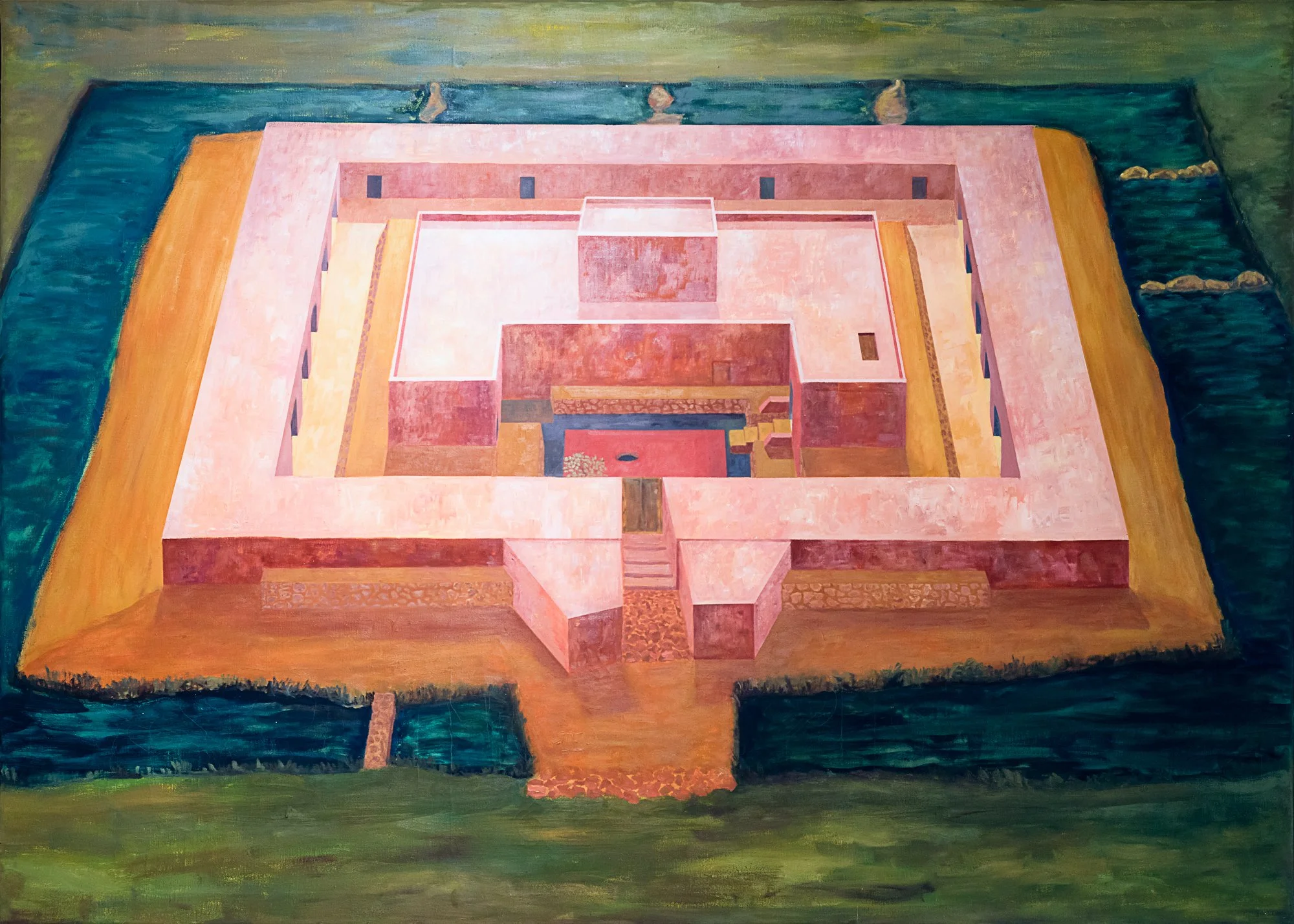
City plan of Numantia by Juan Loperraez (1788).

Further Reading

  • Appian, Roman History, Book VI (The Spanish Wars). Accessible online in English at Livius.org.

  • Appian, Roman History, Loeb Classical Library, vols. I–IV (Harvard University Press).

  • Schulten, A., Numantia: Die Ergebnisse der Ausgrabungen 1905–1912. Leipzig, 1914.

  • Richardson, J. S., Hispaniae: Spain and the Development of Roman Imperialism, 218–82 BC. Cambridge University Press, 1986.

The Brandenburg Gate — From Division to Unity

The Brandenburg Gate, Berlin (Germany).

Few monuments carry the emotional weight of the Brandenburg Gate in Berlin. Once the proud entryway to the Prussian capital, it has stood through revolutions, wars, and the long shadow of the Cold War. Built in the late 18th century as a neoclassical triumphal arch, it symbolized peace and power under Frederick William II. But history had other plans.

In the 20th century, the Gate became a silent witness to chaos — Nazi parades, the devastation of war, and then the Berlin Wall that sealed it off from both East and West. For decades it stood in a no-man’s-land, unreachable, its meaning twisted by politics but never erased.

When the Wall fell in 1989, thousands gathered here to celebrate not conquest but reunion. The Brandenburg Gate transformed overnight from a symbol of division to one of hope and unity.

The Gentle 18th Century Prince of Trier – Johann Philipp von Walderdorff

The baroque tomb monument of Archbishop Johann Philipp von Walderdorff in Trier Cathedral — the prince lies serenely before Death itself, while angels above lift his soul toward eternity.

In the quiet side aisle of Trier Cathedral, beneath a swirl of baroque marble, lies a prince who once ruled not by fear or fire, but by grace. The inscription calls him “clementia alter Titus” — “in his mercy, another Titus.” His name was Johann Philipp von Walderdorff, Prince-Elector and Archbishop of Trier, Bishop of Worms, and perpetual Administrator of Prüm. He lived in a world where the Rhine was both a frontier and a lifeline, a corridor of faith and power running from Cologne to Mainz and beyond.

The 18th century was the twilight of the prince-bishops — those curious rulers who combined mitre and sceptre, and who governed both souls and streets. In the Rhineland, their territories were dotted with vineyards, abbeys, and the great palaces that embodied their dual authority. Among them, Walderdorff stood out as a man of refinement and quiet ambition. Born in 1701 into an old noble family, he rose through the church ranks to become Trier’s Elector in 1756, one of the seven men entitled to choose the Holy Roman Emperor. Yet his legacy was not in politics or war, but in the enduring beauty he left behind.

Walderdorff commissioned the lavish Kurfürstliches Palais beside Trier’s Roman basilica — a masterpiece of Rococo elegance where angels and cherubs play among stuccoed vines. He rebuilt the castle at Wittlich, improved the public roads of his domain, and founded the perpetual adoration of the Eucharist in Trier’s cathedral. His reign was gentle, prosperous, and deeply rooted in the artistic flowering of the late baroque — an age when faith still expressed itself through splendor.

When he died in 1768, his body was laid to rest in the very cathedral he had adorned. His monument speaks the language of the era: black marble veined with white, golden letters glowing under candlelight, and above it the sculpted figure of the serene prelate himself. To those who pass by, it is more than a grave — it is a reminder of a time when the Rhine valley was a patchwork of princely bishoprics, each with its own court, orchestra, and chapel, each ruled by men who saw no divide between holiness and beauty.

Walderdorff’s world would soon vanish. Within a generation, the French Revolution and Napoleon swept away the ecclesiastical states that had shaped the region for a millennium. Yet in Trier, among the stones that remember Rome and the saints who followed, his marble tomb still glows softly — a relic of an age when mercy and art walked hand in hand.

Further Reading

  • The Electorate of Trier and the Prince-Bishops of the Rhine – A cultural history of ecclesiastical states in the Holy Roman Empire.

  • The Rococo in the Rhineland – Architecture and patronage under the prince-archbishops of Trier.

  • Trier Cathedral: From Constantine to the Baroque – A study of the cathedral’s evolving role in European history.

Foreign Policy for Sale: How Trump’s inner circle sees the Ukraine War as a Business Opportunity

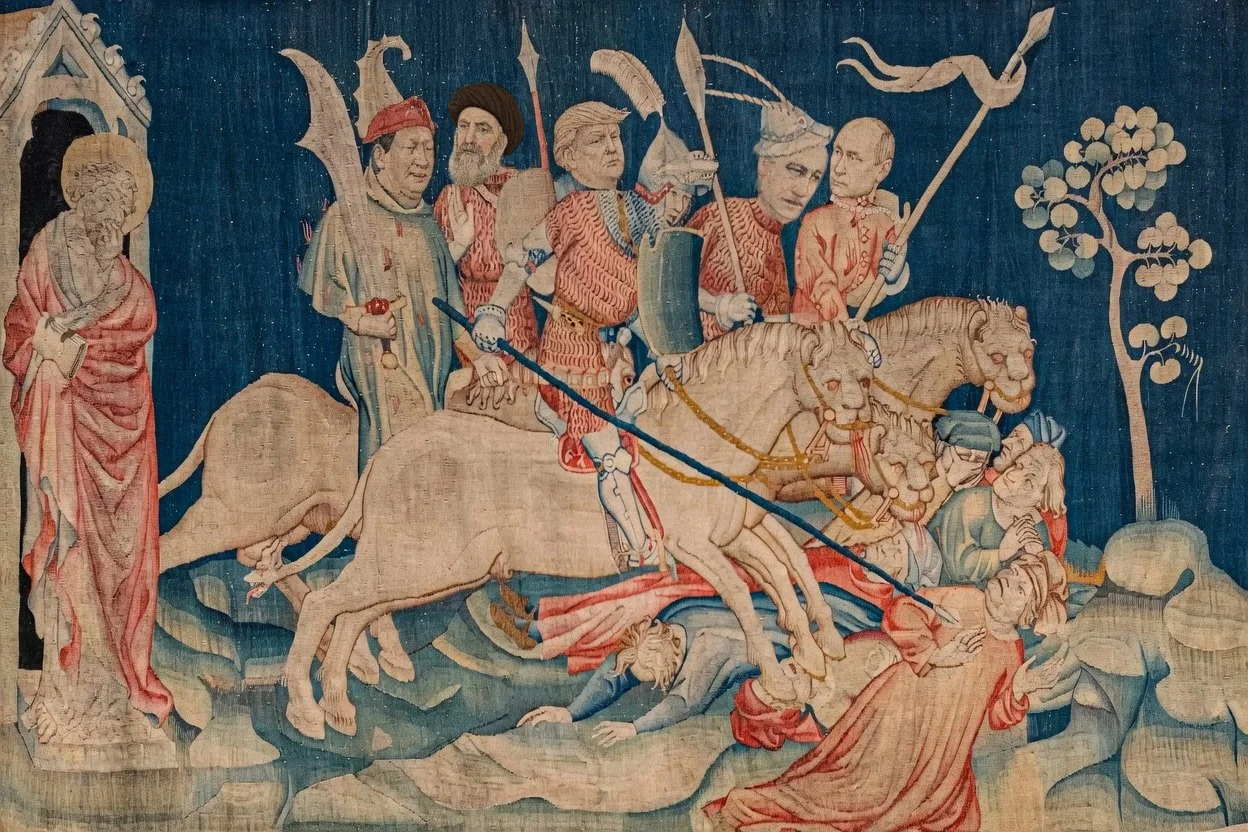
Trump and Putin (image created with AI).

Anne Applebaum’s analysis of the war in Ukraine exposes a troubling shift in how American foreign policy is currently being practiced. Her central argument is not that diplomacy has failed, but that its purpose has been distorted. Decisions that should be guided by public interest, democratic accountability, and long-term security increasingly appear to be shaped by private financial incentives.

At the heart of her critique is a series of informal and opaque “peace initiatives” related to Ukraine. These efforts are not being led by career diplomats, allied negotiators, or institutions accountable to voters and legislatures. Instead, they involve business figures and political confidants operating through private channels between the United States and Russia. While presented as attempts to end the war, the structure and content of the proposals suggest a different underlying logic.

According to reporting Applebaum cites, early versions of these peace plans paired Ukrainian territorial concessions with prospects for American–Russian commercial cooperation. These reportedly included access to natural resources, energy infrastructure, and even the use of frozen Russian assets. Within this framework, Ukraine’s sovereignty and Europe’s long-term security are not treated as fundamental principles, but as variables in a deal.

The substance of the proposed settlement makes this clear. Ukraine would be expected to formally recognize Russian control over occupied territories, renounce any future NATO membership, and accept an agreement without credible security guarantees. Applebaum stresses why this is not merely unfair, but dangerous. Russia has failed to win the war militarily. What it now seeks is a political victory—achieved by persuading or pressuring Ukraine, through American intermediaries, to surrender what Russian forces could not seize on the battlefield.

From Ukraine’s perspective, such a settlement would leave the country exposed. Without firm security guarantees, there can be no real reconstruction, no stable return of refugees, and no lasting investment. A “peace” built on these terms would not end the conflict; it would simply postpone the next phase of it.

Applebaum’s concern, however, extends well beyond Ukraine. What this episode reveals, she argues, is a deeper corrosion of decision-making within the United States itself. Foreign policy begins to resemble a commercial transaction, shaped by individuals whose primary expertise lies in deal-making rather than statecraft. The critical question shifts from “What serves national and allied security?” to “Who stands to gain financially?”

This model closely mirrors the systems Applebaum has long studied in authoritarian states. In such systems, political power and economic power are fused. Diplomacy, business, and state authority become indistinguishable, and public institutions serve the enrichment of a narrow elite. Her warning is stark: when anticorruption laws are ignored and access to power can be purchased, democratic systems begin to function in ways that closely resemble those they once opposed.

The contrast with Ukraine itself is striking. Despite being at war, Ukraine maintains active anticorruption institutions that investigate even figures close to political leadership. These efforts persist because Ukrainians understand something fundamental: corruption is not only immoral, it is strategically dangerous. It weakens the state and makes it vulnerable to external coercion. In this respect, Ukraine often appears more committed to democratic self-correction than the country negotiating its future.

Europe, meanwhile, is adjusting to the realization that American leadership can no longer be assumed. Countries closest to Russia have increased defense spending and military cooperation, while broader European support for Ukraine continues to grow. Germany’s shift in strategic thinking is particularly significant. The war is accelerating Europe’s move toward greater responsibility for its own security.

Applebaum does not argue that the United States has lost all influence. But she makes clear that influence erodes when foreign policy is treated as an opportunity for profit rather than a public trust. A settlement shaped by private interests would weaken Ukraine, destabilize Europe, and further undermine confidence in democratic governance.

The lesson of her argument is ultimately straightforward. When the Ukraine war is viewed as an opportunity—for access, leverage, or financial gain—foreign policy ceases to serve the public. The cost is paid not only on the battlefield, but in damaged alliances, fragile peace, and the gradual erosion of democratic credibility itself.


About Anne Applebaum: Anne Applebaum is a Pulitzer Prize–winning historian and journalist, best known for her work on authoritarianism, Eastern Europe, and the legacy of Soviet power. She is a staff writer at The Atlantic and a senior fellow at Johns Hopkins University. Her books include Gulag: A History, Red Famine: Stalin’s War on Ukraine, and Autocracy, Inc., in which she examines how modern authoritarian systems merge political power with private wealth. Applebaum lives in both the United States and Poland and has written extensively on Ukraine, Russia, and the evolving crisis of democracy in the West.

Arent Willemsz, a Pilgrim in a World Breaking Apart (1525) - Part II

Detail from The Seven Works of Mercy (1504) by the Master from Alkmaar.

(What follows is a retelling of Arent Willemsz’s journey, based on his own travel diary from 1525.)

Faith Under Contract: From Venice to Jerusalem and Back, 1525

In Venice, devotion becomes paperwork.

Arent Willemsz quickly learns that a pilgrimage to Jerusalem is not only a spiritual undertaking but a legal and financial system. Passage is negotiated with shipmasters. Payments are split into instalments. Clauses are spelled out in chilling clarity: die before Jaffa, and half the passage money is returned; set foot in the Holy Land, and the full sum is owed—even if you die the next day.

Arent watches carefully and advises future pilgrims not to delay. Those who arrive late pay more, get worse terms, and suffer most at sea. Experience has made him cautious.

The voyage to Jaffa is hard. Pilgrims fall ill. Discipline aboard ship is strict. Space is cramped. Food is rationed. When land finally appears, they do not dock easily. Ships anchor offshore. Pilgrims are ferried in under watchful eyes. Jaffa itself offers no welcome—only control, fees, and guards.

From here on, the pilgrimage is choreographed.

Local guides take over. Armed escorts are mandatory. Routes inland are fixed. The pilgrims move from place to place—Rama, Jerusalem, Bethlehem—according to established patterns. Access to holy sites is regulated. Devotion is permitted, but never freely.

Jerusalem is approached with reverence and restraint. Arent does not indulge in rapture. Instead, he measures distances, records prayers, notes indulgences earned. The Holy Sepulchre is described soberly, as a place of obligation fulfilled. He reminds the reader that having stood where Christ suffered, one is now more accountable than before. Pilgrimage, he insists, increases responsibility.

One of the most demanding episodes follows: the journey to the River Jordan. It is dangerous, exhausting, and costly. Guards must be paid. The heat is punishing. Yet to bathe in the Jordan is to complete the pilgrimage properly. Arent records the rite calmly, noting both its spiritual meaning and its logistical burden.

Throughout the Holy Land, Arent’s tone toward non-Christians is practical rather than hostile. Muslim authorities control access; Christian pilgrims comply. Power, he understands, lies elsewhere now. Survival depends on cooperation, payment, and restraint.

The return begins almost immediately after the rites are completed. There is no lingering. Mortality is close at hand. The road back across the Mediterranean is as uncertain as the way out.

When Arent finally returns to Venice, the city feels different. He understands systems better now—contracts, authority, organization. He has learned that faith alone does not carry you through the world. Unity, preparation, and judgement matter just as much.

In his closing advice, Arent becomes a guide for others. He lists what to buy, what to avoid, how to negotiate, whom to trust, and when to stand firm. His pilgrimage has turned him from a traveler into a witness of a changing age.

What remains is not only a journey to Jerusalem, but a portrait of Europe in transition: medieval devotion moving through a world already becoming modern.

Source:
Based on Arent Willemsz, Bedevaart naar Jerusalem (1525), complete text preserved in the 19th-century scholarly edition (DBNL PDF).

Blog item and image choice inspired by “125: de pelgrimstocht van ambachtsmeester Arent Willemsz en zijn bezoek aan Maastricht” by Sandra Langereis and the book “Pelgrimage naar Maastricht” the article is published in.

Arent Willemsz, a Pilgrim in a World Breaking Apart (1525) - Part I

Detail from The Seven Works of Mercy (1504) by the Master from Alkmaar.

(What follows is a retelling of Arent Willemsz’s journey, based on his own travel diary from 1525.)

Walking Through a Collapsing World: From Delft to Venice, 1525

In April 1525, Europe was not a safe place to walk.

The old certainties still stood—saints’ relics, pilgrimage routes, Mass at dawn—but beneath them the ground was shifting fast. Monasteries were being looted, peasants were arming themselves, Luther’s ideas were spreading by word of mouth and pike-point, and authority was increasingly contested village by village.

It is into this world that Arent Willemsz, barber of Delft, stepped when he left his city before sunrise on 26 April 1525, having heard Mass and eaten a modest breakfast. His destination was Jerusalem. His route would take him through the Low Countries, the Rhineland, the German lands, the Alps, and finally to Venice. What he left us is one of the most alert and human pilgrimage narratives of the early sixteenth century.

Arent does not travel alone. His company is mixed: priests, craftsmen, townsmen from Haarlem, Alkmaar, Dordrecht, Gouda. They move as people did then—by foot, wagon, and boat—measuring the world in miles walked, inns reached before nightfall, and the quality of bread and wine along the way.

Almost immediately, danger intrudes. Near Roosendaal, armed men—snaphanen, mounted highway robbers—approach. Arent notes the moment carefully: weapons ready, nerves taut, each man alert. When the pilgrims stand firm, the attackers veer away. “God be praised,” Arent writes, and presses on. It will not be the last time God and readiness are mentioned in the same breath.

Cities offer temporary shelter and ritual reassurance. In Maastricht, the pilgrims are shown the treasures of Saint Servatius: staff, chalice, garments, even the cup from which the saint once drank. Arent lingers over these objects. His faith is not abstract. It lives in weight, texture, craftsmanship. You drink from a cup and feel yourself healed.

But beyond the city walls, the road has changed.

Again and again, Arent encounters armed peasants—often explicitly identified as Lutherans—occupying villages, blocking inns, tearing apart monasteries, interrogating travelers. Some number in the hundreds, others in the thousands. They ask questions. They seize weapons. They take money, food, wine. Sometimes they beat those they stop. Sometimes they let them go.

The pilgrims learn quickly that piety alone will not save them. They hire escorts for protection. They travel in formation. Firearms are kept visible. Numbers matter. Reputation matters. When warned that bandits are waiting on Gulpen hill to ambush pilgrims bound for the Holy Sepulchre, they delay just long enough that the robbers grow impatient and attack other, weaker travelers instead.

The social texture of the journey is rich and uneasy. In inns, they eat and drink with locals who are curious, suspicious, or frightened. They bargain constantly—over beds, meals, escorts, ferries, wagons. They hear rumours of battles, massacres, entire villages wiped out. In one place they are refused lodging outright; in another they are welcomed warmly by monks who know their days may be numbered.

Yet there are moments of relief and even joy. In Aachen and Cologne, Arent records relics with a craftsman’s fascination: crystal vessels, jeweled reliquaries, skulls with hair still attached, rings once worn by saints. In the Alps, exhaustion gives way to wonder when they see snow high on the mountains. Two companions scramble up simply to touch it, returning with handfuls of snow and laughter, and for a brief moment the world seems young again.

Gradually, Italy begins. Roads improve. Wine becomes better and more plentiful. The threat of armed peasant bands fades. The mountains end at Bassano. And then, after weeks of fear, hunger, prayer, negotiation, and sheer endurance, Arent reaches Venice.

Venice overwhelms him. A city without gates. Streets so narrow that three men cannot walk abreast. Houses rising directly from water. Boats everywhere—fifteen thousand of them each day. He marvels at the Arsenal, where thousands of workers can equip fleets at astonishing speed, and at the city’s discipline, wealth, and latent violence. Venice, he understands, is not merely rich. It is organized for power.

Here, at the edge of the lagoon, Arent pauses. The land journey is over. Ahead lies the sea, the Holy Land, and Jerusalem itself.

Source:
Based on Arent Willemsz, Bedevaart naar Jerusalem (1525), complete text preserved in the 19th-century scholarly edition (DBNL PDF).

Blog item and image choice inspired by “125: de pelgrimstocht van ambachtsmeester Arent Willemsz en zijn bezoek aan Maastricht” by Sandra Langereis and the book “Pelgrimage naar Maastricht” the article is published in.

The Camino, the Bridge, and the Hermitage (Sahagún, Spain)

The Ermita de la Virgen del Puente—founded in the 12th century beside the pilgrim bridge—still stands as a modest sanctuary of rest and remembrance on the Camino Francés.

East of Sahagún, where the flat lands of Tierra de Campos merge with the soft folds of the Páramo, the Valderaduey River glints in the sun. Here, just beyond the medieval bridge that once carried countless feet westward to Santiago, stands the Ermita de la Virgen del Puente—a small chapel whose silence belies centuries of human passage.

In the twelfth century this spot marked one of the most strategic crossings on the Camino Francés, the main route that drew pilgrims from France toward the tomb of Saint James. The Benedictine abbey of Sahagún, rich and powerful, controlled both bridge and chapel. Its monks built a hospital for weary travellers, managed by the Brotherhood of Our Lady of the Bridge—founded in 1188 and composed entirely of clerics loyal to the abbot. Here the poor, the sick, and the road-worn found shelter before facing the next stage toward León.

The rules were strict: no other parish or convent could be established on the site, no one buried here save pilgrims and servants of the hospital. The abbey’s authority extended not just through prayer but through stone, timber and toll—spiritual power intertwined with the control of movement itself.

Today, the bridge has been rebuilt, the hermitage restored, but the sense of passage endures. Walkers on the Camino still pause at the shrine, setting down their packs to rest in the shade and listen to the whisper of water below. The fields shimmer gold, as they must have done when Alfonso VI ruled and the world beyond seemed impossibly wide.

Here, faith and landscape merge: the bridge unites two shores, the road binds centuries, and the hermitage keeps its quiet watch over them all.

The old bridge over the Valderaduey, once guarded by Benedictine monks, carried pilgrims across this quiet river on their long road to Santiago.

A December Weekend That Felt Like Summer in Tarifa (Spain)

A kite-surfer on the Atlantic Ocean, Tarifa (Spain).

There are days in Tarifa when the calendar simply gives up and stops insisting it’s winter. This weekend was one of them. The sun stretched wide over the beach, and the whole town seemed to drift lazily along the boulevard.

The first to claim the sand were the dogs—joyful, unstoppable, deliriously happy creatures. They chased each other in wild loops and invented elaborate games whose rules only they understood. Their owners could hardly keep up; the dogs were having the time of their lives.

Everyone walked with a little more lift in their step. Maybe it was the warmth, maybe the light, maybe the simple pleasure of having nowhere else to be. Conversations floated by—Spanish, French, German, English—woven together by the rhythm of the waves.

Out on the water, the usual Tarifa tribe was at it again. Surfers paddled into the ocean. Kite-surfers scanned the horizon, hopeful but not entirely convinced the wind would do them a favour. And when it didn’t, the beach turned into an impromptu football pitch: bare feet in the sand, improvised goals, laughter drifting far across the shore. It felt as if summer had quietly returned for a day.

The impromptu soccer team.

Three surfers ready to play with the waves.

For some, the pull of Balneario Beach Club became irresistible. A plate of fresh fish, crisp and perfect. A glass of cold white wine catching the sun. Music drifting softly, almost lazily. A place to catch up with friends, to linger with family—because here, as in much of Europe, that’s what life is really about. The whole place breathed relaxation—the kind that makes you realise how important and precious such uncomplicated moments are.

The Balneario Beach Club Tarifa.

A December weekend in Tarifa, but honestly, it could have been June. And maybe that’s the real magic of this corner of Europe: time bends, moods lift, and for a little while, life feels wonderfully simple.

At the Balneario Beach Club Tarifa.

The Silent Lady of Salamanca: The Grave of Aldonza Díez Maldonada

Sepulcher of Doña Aldonza Díez Maldonada in the Capilla de Anaya, Old Cathedral of Salamanca. Shown as a serene recumbent figure with a rosary in hand, her monument blends personal devotion with late Gothic artistry, linking her memory to the sacred life of the cathedral.

In the Old Cathedral of Salamanca, the Capilla de Anaya shelters a quiet yet striking tomb. It belongs to Doña Aldonza Díez Maldonada, remembered as the mother of Fernán Nieto, a nobleman active around 1500.

Her effigy shows her lying in repose, a rosary in her hand, framed by carvings of the Virgin and holy women. Unlike the grand monuments of bishops and dukes, Aldonza’s tomb reflects devotion and family memory rather than worldly power.

Art historians trace its style to fifteenth-century Toledo, where Hispano-Flemish influences brought grace and realism to stone. Though her exact story remains partly veiled, Aldonza’s monument still speaks of faith, dignity, and the place of women in Salamanca’s medieval nobility.

Wandalbert: Prüm’s Poet of Time

Mönch Wandalbert von Prüm (813).

On a sunlit corner in Prüm stands a block of carved memory. At its center a monk leans over a panel, stylus poised, as if he has just paused mid-line to catch the right cadence. Around him, little reliefs crowd the stone: saints in niches, vines curling like marginalia, symbols for the turning year. This monument —“Mönch Wandalbert von Prüm (813)”— carved by the Eifel sculptor Pit Weiland as part of the town’s Karolingerweg. The Latin beside the figure ends with a scribe’s flourish—explicit martyrium, metro editum… extremum festum Decembris—the tidy full stop of a poet who measures time in verse.

Why Prüm mattered

Prüm was not a remote cloister but a royal powerhouse in the Carolingian world. Kings endowed it with estates, immunity, and the freedom to manage its lands; emperors retired there; pilgrims came for the famed Sandals of Christ. In a region strung between the Moselle, the Ardennes, and the Rhine, the abbey sat on trade routes and supervised a web of farms, mills, and forests that made it an economic hub as well as a spiritual one.

Ecclesiastically, Prüm stood within the province of Trier—the great archbishopric of the Middle Rhine—yet enjoyed the sort of royal and papal protection that gave leading monasteries a measure of exemption from ordinary diocesan interference. Bishops still ordained, blessed altars, and oversaw parish life; but Prüm governed its own house, appointed its officials, and managed a chain of dependent churches and granges on its estates. In the loose but legible hierarchy of the age, the abbey answered upward to throne and pope, coordinated sideways with peer houses across the Carolingian realm (think Fulda, Corbie, Reims), and negotiated locally with the bishops whose dioceses held its lands. That three-level relationship—imperial, monastic, diocesan—explains why Prüm’s voice carried so far.

Its scriptorium and school turned that authority into culture. Charters standardized obligations; cartularies and the later Prüm polyptych mapped holdings like a textual atlas; and scholars such as Regino of Prüm wrote histories that stitched the region into the wider story of Europe.

A poet of the calendar

Wandalbert belonged to this world of rule and rhythm. His metrical martyrology gives every day its saints and begins each month with a poem on the season—weather and winds, vineyard tasks and fish runs, bread and bees and blessings. Read straight through, the book becomes a choreography for a Christian year lived in farms and forests. It is literature, liturgy, and local knowledge at once.

A page from the Martyrologium by Wandalbert of Prüm.

The relief captures that fusion. The artist surrounds Wandalbert with a visual rota—a wheel-of-the-year feeling. Side panels stage small dramas: an altar, a martyr’s triumph, a saint’s feast. The crisp little capitals on the right could be a folio margin, closing a December tale with a neat “explicit.”

813: when language shifted

The date on the base ties Wandalbert to a reforming moment. In 813 Charlemagne called regional councils and insisted that preaching be done in languages people actually spoke—rustica romana for Romance speakers and theodisca for the Germanic world. The policy was larger than sermons: teaching should be audible inside ordinary life. Wandalbert’s poems are an answer in miniature. He kept Latin’s music but bent it toward the village: tools and birds, market days and fast days, the sound of bells and the grind of the mill.

Reading the sculpture

The stone reads like a page. Wandalbert sits on a raised platform, one hand steadying a tablet, the other lifting his stylus as if listening for the next footbeat. A hinged drawing frame angles toward him—an artist’s tool turned into a metaphor for measuring time. Around the rim, saints stand in tiny arcades; below them twine vines and tools of work, hints of vineyards, fields, and mills.
On the right, the neat block script could be a folio margin: martyrs named, December called out, the closing “explicit” that ends a book. Even the little scales tucked near his knee suggest balance—of seasons and feasts, labor and prayer, prose and verse. It is both portrait and instrument: a man and the calendar he tunes.

What endures

Prüm’s abbey no longer governs estates the way it once did, but its grammar still orders the landscape. Parish boundaries, fair days, field names, and the memory of processions echo the monastic clock; the diocese remains the frame, the monastery the old metronome. Wandalbert’s poems feel unexpectedly practical: a theology of weather and work, bees and bread, written to be carried in the head.
That is the sculpture’s charge. It reminds us that culture is kept not by proclamations but by rhythms—what gets harvested when, when the fast begins, when the bell calls the village to sing. Prüm turned those rhythms into a public good; Wandalbert gave them music. Stand before the stone and you can feel the year begin to move.

Further Reading

  • Wandalbert of Prüm, Martyrologium (editions/translations)

  • The Prüm Polyptych (c. 893)

  • Regino of Prüm, Chronicle

  • Rosamond McKitterick, The Carolingians and the Written Word

  • Jean-Pierre Devroey, The Economy of the Carolingian Empire

  • Studies on the Councils of 813 and vernacular preaching

  • Research on the Sandals of Christ and the cult at Prüm

  • Surveys of Carolingian monasticism in the Rhineland–Ardennes

Rotterdam my City — The Cube Houses of Rotterdam

The Cube Houses of Rotterdam (The Netherlands).

In the heart of Rotterdam, tilted above the busy streets near Blaak station, stand a row of yellow cubes that look as if they’ve tumbled from the sky and frozen mid-fall. These are the Cube Houses (in Dutch: Kubuswoningen), designed in the late 1970s by architect Piet Blom, who imagined each house as a tree — together forming an abstract forest of modern living.

Each cube rests on a hexagonal pillar and leans at a 45-degree angle. Inside, every wall becomes a surprise: windows are tilted, floors meet at odd corners, and space itself feels like an adventure in geometry.

Blom’s design was part of Rotterdam’s bold post-war identity — a city that rebuilt itself not by copying the past but by inventing the future. Today, one of the houses serves as a museum, and visitors step inside to experience what it’s like to live within a dream.

The Cube Houses aren’t just architecture; they’re a statement — proof that in Rotterdam, imagination can be built in concrete, glass, and bright yellow panels.

Holy Sightseers

A group of Asian nuns on St. Mark’s Square, Venice (Italy).

Even nuns are tourists. Across Europe, they travel in small, smiling groups — cameras in hand, guidebooks tucked beneath their habits — tracing the footsteps of saints and centuries. On Piazza San Marco in Venice, amid selfie sticks and pigeons, their quiet laughter blends with the crowd’s hum. Faith meets curiosity; devotion meets delight.